


What Dallas Business Owners Need to Know Before Listing
How to Sell Your Business in Dallas
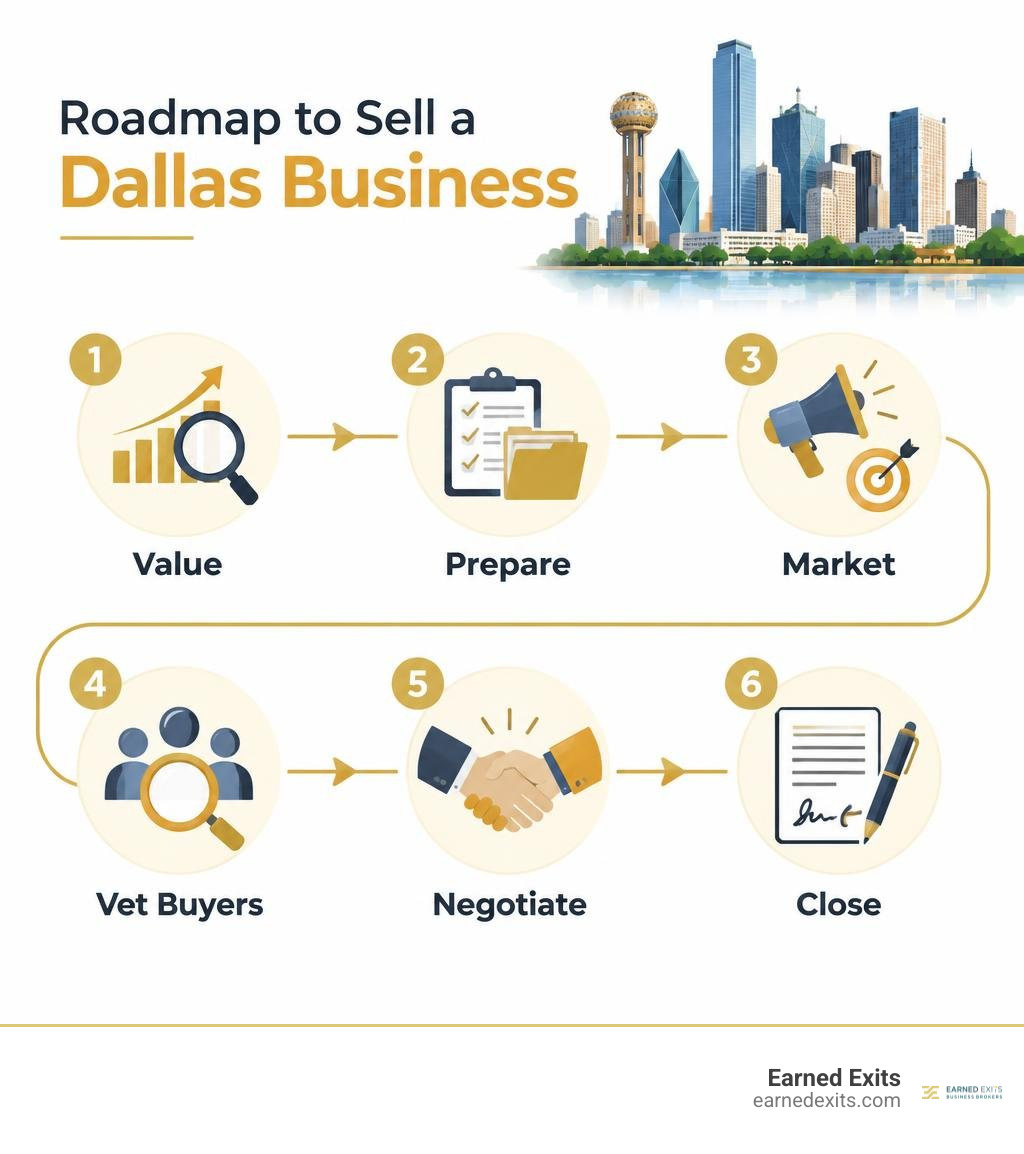
If you’re thinking, “How do I sell my business in Dallas?” start by getting a realistic valuation, organizing your financial records, and deciding what you want from the sale. Then market the business confidentially, check that buyers can afford it, compare offers, and prepare for due diligence before you sign a purchase agreement. You don’t need to figure it all out at once, but the work you do before listing can make the process less stressful.
I’m Britt Clas, a business broker and partner at Earned Exits. I help owners who search “Sell My Business Dallas” work through valuation, buyer conversations, due diligence, and closing with a clear plan.
Sell My Business Dallas glossary:
Key Factors When Planning to Sell My Business in Dallas

Selling an enterprise in North Texas places you in one of the most dynamic commercial corridors in the country. The Dallas-Fort Worth metroplex features a thriving economic environment, but capital markets reward preparation over optimism. If you are preparing to navigate the local market, understanding regional dynamics will help you position your company effectively.
The DFW region is home to over 30,000 small businesses, creating an active marketplace where buyers and private equity groups constantly seek acquisitions. Approximately 1 in 5 small business owners in Dallas are considering an exit over the next five years, largely motivated by retirement or strategic shifts. Because service-based companies make up over 40% of all regional listings, standing out requires demonstrating steady cash flow, documented operational systems, and sustained growth.
When preparing to sell your Texas business for top dollar, market timing and local economic factors work heavily in your favor. Corporate relocations, population influx, and business-friendly policies continue to draw qualified individual buyers, family offices, and strategic acquirers into North Texas.
Determining Your Business Valuation in the DFW Market
An accurate valuation grounds your entire exit strategy. Setting the asking price too high risks letting the listing go stale, while pricing too low leaves hard-earned equity on the table.
In the lower middle market and main street sectors, valuations typically rely on Seller’s Discretionary Earnings (SDE) for owner-operated companies, or Earnings Before Interest, Taxes, Depreciation, and Amortization (EBITDA) for larger organizations with managed leadership teams. Across the Dallas metro area, small businesses sell at an average multiple of 2.5 times their annual net profit (or SDE), though companies with recurring contracts, strong operating margins, and low customer concentration regularly command higher multiples.
Reviewing the definitive guide to business valuation helps demystify how normalized cash flow and balance sheet strength influence your final multiple. It pays to stop guessing what your business is worth and calculate your recast earnings based on verifiable financial history.
How to Prepare When I Sell My Business in Dallas
Preparation often dictates whether a deal closes at premium pricing or stalls out during buyer reviews. When structuring your operations for a transfer, focus on these critical areas:
- Financial Cleanup: Ensure at least three full years of profit and loss statements, balance sheets, and tax returns are organized and reconciled.
- Identify Discretionary Add-Backs: Document valid one-time, non-operational, or personal expenses running through the company (such as owner health insurance, non-essential travel, or one-off equipment repairs) to show true earnings power.
- Standard Operating Procedures (SOPs): Write out training manuals, vendor workflows, and daily operational steps. If your business depends entirely on you showing up every morning, buyers see operational risk.
- Address Customer Concentration: Ensure no single client represents more than 15% to 20% of your total revenue.
- Commercial Curb Appeal: Organize physical assets, service equipment, and ensure clean digital properties and customer agreements.
For owners new to transaction planning, reviewing a comprehensive beginner’s guide to selling a business provides a practical foundation for setting realistic timelines and organizational milestones.
Selecting Expert Representation in the Local Market
Navigating an exit while running daily operations can quickly stretch an owner thin. A business broker or M&A advisor manages deal flow, shields company confidentiality, and creates competitive tension among qualified buyers.
Securing the right representation involves finding the right Texas business broker who understands the local DFW landscape and has experience closing transactions in your specific industry. Following a structured framework for hiring a professional business broker ensures you partner with an advisory team that provides rigorous CFO-level due diligence support, strong buyer vetting processes, and structured communication.
The Step-by-Step Process to Exit Successfully

A successful transaction follows an orderly path from initial discovery through escrow distribution. Following proven steps to a smooth exit keeps momentum moving forward and prevents avoidable delays.
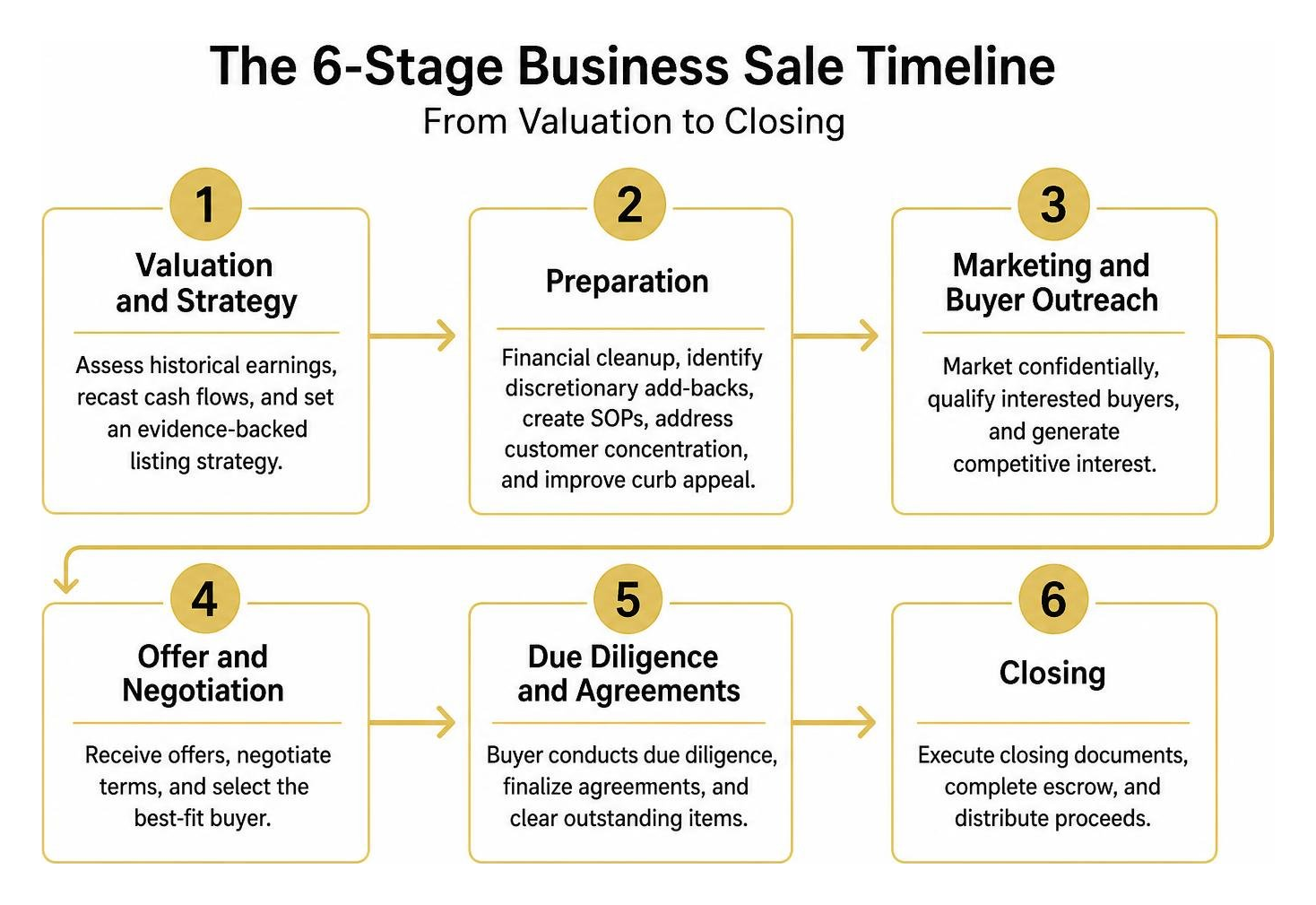
The median time to complete an acquisition in Dallas ranges from 6 to 9 months, depending on operational complexity, industry sector, and deal terms.
Proven Steps to Sell My Business Dallas from Listing to Closing
- Valuation and Strategy: We assess the company’s historical earnings, recast cash flows, and set an evidence-backed listing strategy.
- Marketing Collateral Development: We build a blind profile (a high-level teaser that preserves anonymity) and a Confidential Information Memorandum (CIM) detailing operations, historical financials, and growth opportunities.
- Confidential Listing Launch: The opportunity is marketed through targeted outreach, private buyer networks, and secure platforms without revealing company identity.
- Buyer Vetting and NDA Execution: Prospective purchasers sign non-disclosure agreements and provide financial proof of funds before receiving the CIM.
- Buyer-Seller Meetings & Offers: Screened buyers submit a non-binding Letter of Intent (LOI) outlining proposed valuation, deal structure, and working capital expectations.
- Negotiation & Escrow Deposit: Once an LOI is signed, the buyer deposits earnest money into escrow, kicking off an exclusive due diligence window.
- Definitive Purchase Agreement & Closing: Legal counsel drafts the asset or stock purchase agreement, consents are obtained, and funds are wired at closing.
Managing Due Diligence and Closing Pitfalls
Due diligence represents the most demanding phase of any transaction. Buyers, their CPAs, and lenders will verify financial accounts, customer contracts, regulatory filings, and employee records.
Deal fatigue often emerges if requests drag out. At Earned Exits, we mitigate this friction by maintaining structured virtual data rooms, managing buyer queries proactively, and providing dedicated due diligence support so our clients can stay focused on running their companies profitably.
Legal, Tax, and Strategic Considerations for Texas Exits
Operating and exiting in Texas provides notable financial advantages, but specific tax structures and legal rules must be managed carefully.
Texas does not levy an individual state income tax, allowing sellers to avoid state-level capital gains taxes on sale proceeds. However, entities remain subject to the Texas Franchise Tax, which requires careful calculation of gross receipts and applicable margins in the exit year.
Understanding local compliance requirements is essential. Reviewing guidelines on selling a business in the Lone Star State ensures clear alignment with state regulations. For owners evaluating cross-jurisdictional rules or broader corporate formations, reviewing entity structuring insights can help clarify structural trade-offs. Additionally, standard Texas non-compete agreements must remain reasonable in geographic scope, duration, and defined business activities to remain enforceable under state law.
For tax matters concerning business transfers, property, and state transaction considerations, sellers can review the Texas Sales and Use Tax Frequently Asked Questions published by the Texas Comptroller of Public Accounts.
Asset Sale vs. Stock Sale Structuring
The structure of your transaction directly dictates liability exposure, tax efficiency, and net proceeds:
| Feature | Asset Sale | Stock Sale |
|---|---|---|
| What is Transferred | Specified assets, equipment, contracts, and goodwill | Corporate entity shares / membership units |
| Buyer Preference | High (allows step-up in asset basis and avoids legacy liabilities) | Lower (buyer inherits historical entity liabilities) |
| Seller Tax Impact | Mixed (goodwill taxed at capital gains rates; equipment depreciation subject to ordinary income recapture) | Favorable (proceeds generally taxed entirely at capital gains rates) |
| Contract Assignability | Requires individual assignment of leases, vendor agreements, and client contracts | Generally seamless since the underlying entity remains intact |
| Liability Retention | Seller retains unknown historical liabilities unless expressly assumed | Transferred to buyer with the corporate entity |
Negotiating purchase price allocation between tangible assets, non-compete covenants, and goodwill during the LOI phase ensures both parties reach an agreeable net tax outcome.
Frequently Asked Questions About Selling a Dallas Business
How long does it typically take to sell a business in Dallas?
The typical sales cycle spans 6 to 9 months from initial engagement to final closing. Highly organized companies priced accurately against market benchmarks often move faster, while highly specialized or capital-intensive operations may require 10 to 12 months to find the right buyer and secure financing.
What is the average valuation multiple for Dallas small businesses?
Most small, owner-operated businesses in the Dallas-Fort Worth area transact between 2.0x and 3.5x SDE, with the regional median averaging around 2.5x net profit. Larger middle-market firms featuring second-tier management teams and robust recurring contracts frequently trade at 4.0x to 7.0x+ EBITDA multiples.
How do I maintain confidentiality while selling my business?
Confidentiality is maintained by using blind marketing teasers that omit company names and identifiable details, requiring signed Non-Disclosure Agreements, screening buyer financial qualifications upfront, and sharing sensitive operational data only through controlled, staged virtual data rooms.
Conclusion
Exiting your company is often the single most significant financial event of your professional career. Preparing your documentation early, understanding local valuation dynamics, and running an organized process ensures you protect your legacy and realize the full value of what you have built.
When you are ready to explore your options, we are here to help you plan an efficient, profitable transition. Contact Earned Exits to discuss how to sell your business in Dallas with confidence.
