


The Ultimate Matchmaker Guide: Finding Your Perfect Business Broker
What Does a Business Selling Broker Do for Mid-Market Owners?
When you decide to transition out of your company, a professional business selling broker serves as your trusted guide, strategist, and project manager. Selling a mid-market company isn’t like selling real estate; it requires deep financial analysis, confidential outreach, and complex deal structuring. Working with experienced advisors ensures you do not navigate this intricate landscape alone. You can learn more in The Ultimate Guide To Hiring A Professional Business Broker.
Core Functions of a Professional Business Selling Broker
At its core, the broker’s role is to bridge the gap between business owners and qualified buyers while maximizing enterprise value. Here is a breakdown of what a business selling broker handles behind the scenes:
- Comprehensive Business Valuation: Establishing a realistic, market-backed valuation using adjusted EBITDA and Seller’s Discretionary Earnings (SDE) metrics.
- Financial Preparation and CFO Support: Reconciling financials and building clear, audit-ready documentation so buyers see zero red flags.
- Creating Marketing Collateral: Crafting anonymous Confidential Information Memorandums (CIM) and pitch decks that highlight growth drivers.
- Buyer Vetting and Qualification: Screening individual and strategic buyers to verify their financial capacity and operational fit before sharing sensitive details.
- Managing Confidentiality: Securing non-disclosure agreements (NDAs) to protect customer, vendor, and employee relationships.
- Intermediary Negotiation: Managing offer structures, seller notes, earn-outs, and purchase terms to create win-win outcomes. Discover how this elevates your exit in our guide on how a business broker elevates your exit strategy.
Typical Business Size and Revenue Ranges Handled
While small main-street brokerages focus on mom-and-pop shops, mid-market brokers specialize in established middle-market organizations. We specifically focus on companies generating $1 million to $40 million in annual revenue.
Companies within this revenue bracket typically possess established management teams, proprietary processes, and proven historical earnings. However, they also face specific buyer scrutiny regarding customer concentration, recurring revenue quality, and financial reporting standardizations. A dedicated business selling broker helps package these elements to appeal to private equity groups, family offices, and strategic buyers.
The Step-by-Step Sale Process, Timelines, and Broker Fees
Understanding the transaction roadmap helps eliminate anxiety and prepares you for each milestone of the sale.

The 117-Day Transaction Process from Start to Finish
While traditional business sales can drag on for a year or more, a structured, organized approach dramatically compresses this timeline. At Earned Exits, the full transaction averages approximately 117 days from listing to close, driven by dedicated financial preparation and active buyer matchmaking.
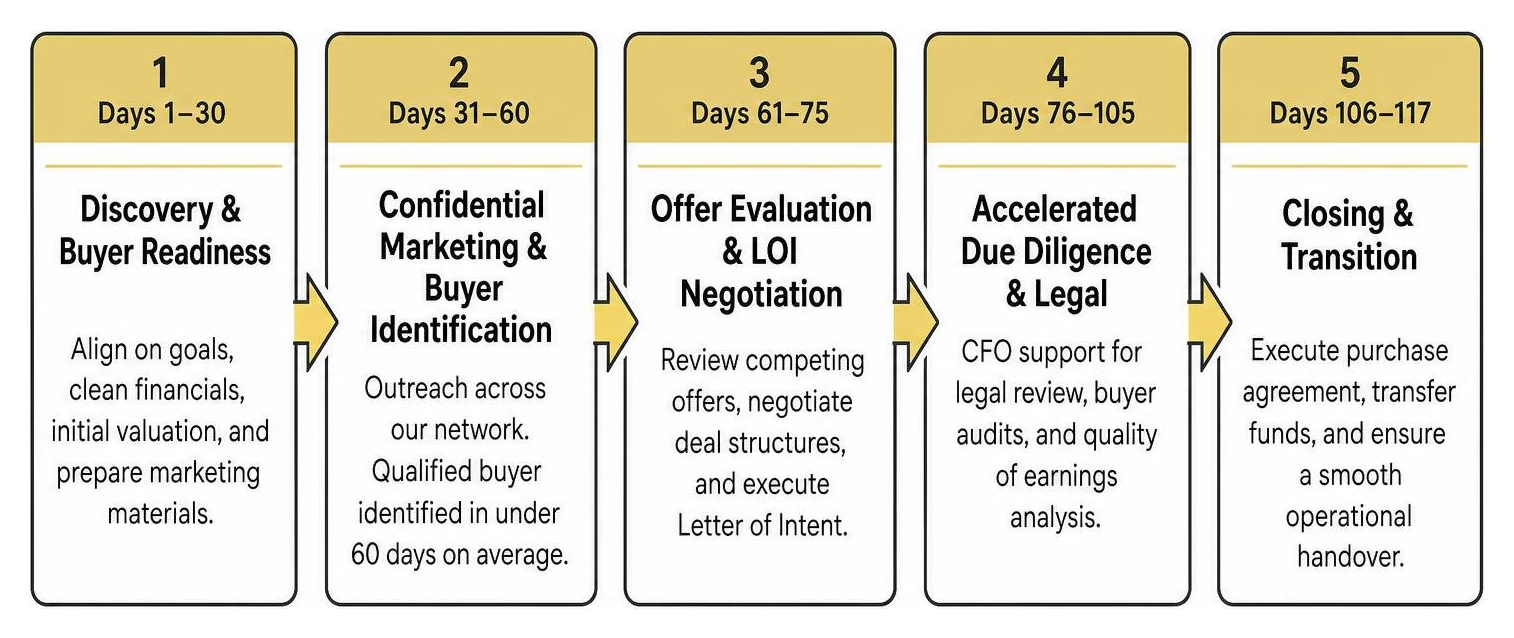
- Discovery & Buyer Readiness (Days 1–30): We align on your personal goals, clean up financial statements, perform initial valuations, and prepare marketing materials.
- Confidential Marketing & Buyer Identification (Days 31–60): Outreach begins across our network. For clients with buyer-ready financials, a qualified buyer is identified in under 60 days on average.
- Offer Evaluation & LOI Negotiation (Days 61–75): Reviewing competing offers, negotiating deal structures, and executing a Letter of Intent (LOI).
- Accelerated Due Diligence & Legal (Days 76–105): Dedicated CFO support assists with legal review, buyer audits, and quality of earnings analysis. Explore step-by-step guidance on demystifying the business broker selling process.
- Closing & Transition (Days 106–117): Final purchase agreement execution, fund transfer, and smooth operational handover.
Success-Based Fee Models and Pricing Transparency
A common question among business owners is: How much does a business broker charge?
Reputable brokers typically operate on a success-based fee structure. This means our compensation is tied directly to the successful closing of your transaction.
- Aligned Incentives: Because the commission is success-based, your broker is strongly motivated to negotiate the highest possible purchase price and best terms.
- Value Offset: Superior marketing, buyer competition, and deal negotiation frequently yield purchase prices that far exceed the cost of the fee.
- No Hidden Retainers: Transparent pricing structures ensure alignment from day one without surprising mid-process costs.
Key Benefits: Success Rates, Confidentiality, and Valuation Drivers
Hiring a specialized business selling broker offers hidden advantages that protect both your current operations and your ultimate financial payout. Read more about the hidden perks of hiring a broker to sell your business.

Maintaining Confidentiality and Buyer Vetting
Maintaining strict confidentiality is paramount. If employees, competitors, or customers learn that a business is for sale prematurely, it can destabilize operations, disrupt staff morale, and erode market value.
A professional broker maintains a buffer through discreet blind profiles and multi-tiered qualification checks. We tap into an expansive network of 20,000+ qualified buyers and access to over 500,000 potential buyers, ensuring your company is placed directly in front of vetted, serious acquirers who have submitted executed NDAs.
Driving Competitive Tension: A Real-World Exits Case Study
Creating competitive deal tension among multiple buyers is the single most effective way to drive purchase price above initial valuations. Consider how structured buyer competition transformed a recent client sale:
| Metric / Parameter | Standard Market Benchmark | Earned Exits Competitive Sale |
|---|---|---|
| Buyer Engagement | 5–10 casual inquiries | 175 active buyer participants |
| Initial Offers Received | 1–2 singular offers | 7 initial offers (within 89% of asking) |
| Final Offer Multiples | 2.5x adjusted EBITDA (market avg) | 4.0x adjusted EBITDA (60% over market) |
| Final Price Realized | Standard asking price | 3 final offers OVER asking price |
In this transaction, despite a high customer concentration risk, building multi-buyer deal tension generated multiple competing offers, driving the valuation up to 4.0x EBITDA—a full 60% over market average.
How to Select the Right Partner for Your Exit
Selecting a business selling broker is one of the most critical decisions in your entrepreneurial journey. You need a partner with a proven track record, regional presence, and dedicated resources.

When evaluating brokers across various regions—whether exploring market opportunities like American Samoa commercial real estate listings or local mid-market hubs—you must demand transparency and dedicated support.
Key Criteria for Evaluating a Business Selling Broker
Look for brokers who provide specialized support teams rather than relying on a single agent handling every task alone.
- The “Trifecta Team” Model: Best-in-class brokerages assign a dedicated executive broker, a specialized marketer, and a financial analyst/CFO support specialist to every client.
- Proven Industry Track Record: Look for firms with significant closing volume. Earned Exits has closed over $2.1 billion in transactions across 17+ industries.
- Financial Preparation Tools: Ensure your broker offers dedicated CFO and due diligence support to streamline financial review stages before going to market.
Review our comparison of the 10 best business brokers and the 5 best business brokers to evaluate options, or explore our curated list of the best business brokerage companies.
Questions to Ask Before Signing an Engagement Agreement
To make sure you are partnering with the right broker, ask pointed questions during your initial interview. Explore our list of 10 questions to ask a business broker for full details, including:
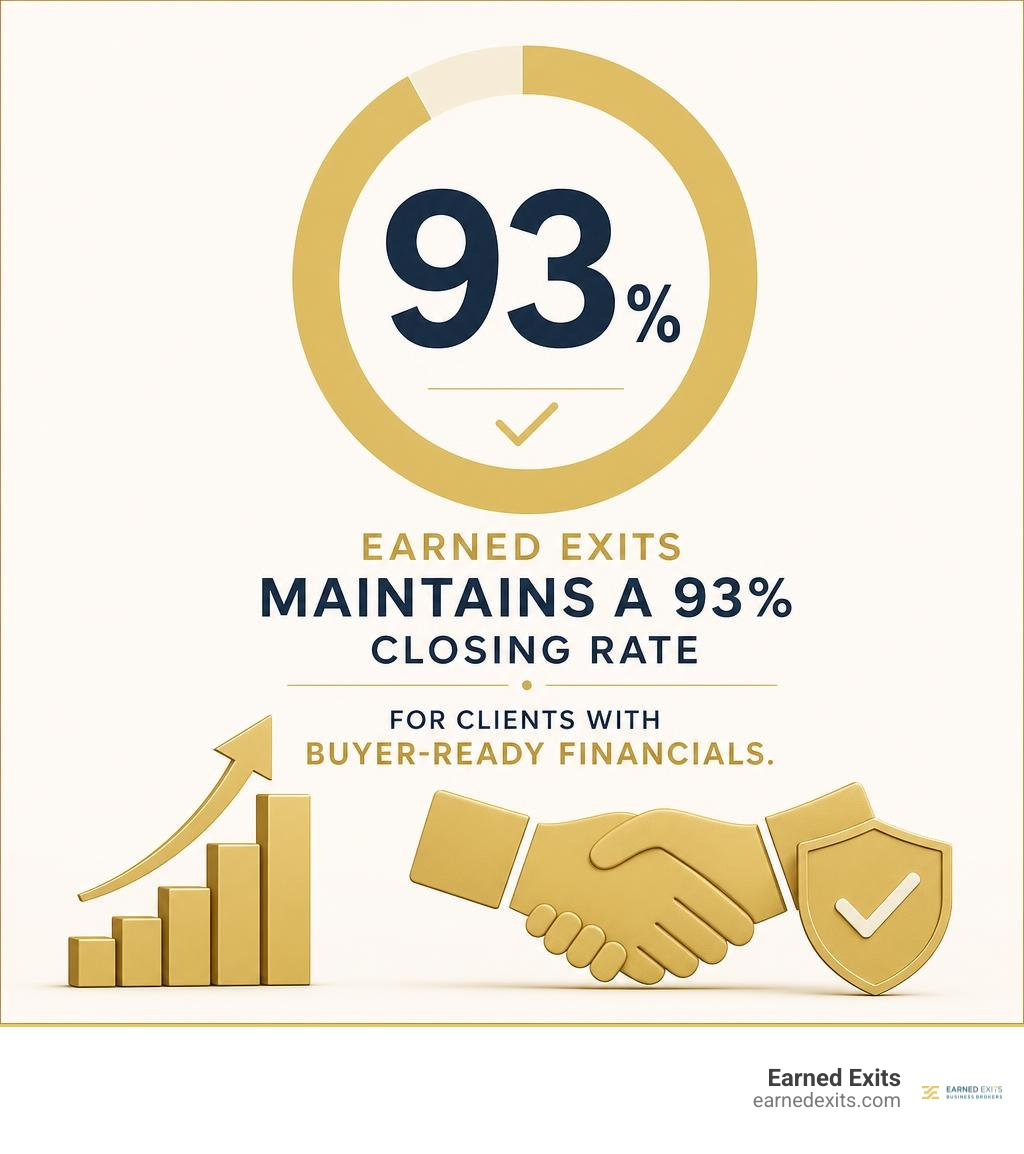
- What is your verified closing rate for companies with clean, buyer-ready financials? (Look for high success benchmarks, such as our 93% closing rate).
- How many active, pre-vetted buyers are currently in your proprietary database?
- How do you structure confidentiality protections before disclosing company identity?
- What specific CFO tools and due diligence support do you provide during audit review?
For regional insights, review guides on selecting trusted business sale brokers or finding top-rated local business brokers near you. You can also check out specific guides like Florida business broker secrets or explore niche expertise like SaaS business brokers and manufacturing business brokers.
Frequently Asked Questions About Selling a Business
What is the average success rate when selling a business with a broker?
While industry-wide closing averages hover around 20% to 30% for unorganized listings, working with a structured broker yields drastically higher success. At Earned Exits, we maintain a 93% closing rate for clients whose financial records are Buyer Ready prior to entering the market.
How long does the entire business sale process take?
On average, our complete exit process takes approximately 117 days. Once financial preparation is finalized, a qualified buyer is typically identified in under 60 days. Thorough upfront preparation directly reduces overall closing time.
How do broker fee structures typically work?
Brokers generally operate on a success-fee basis, earning a percentage commission upon the successful closing of the sale. This structure aligns the broker’s financial incentive with achieving your maximum enterprise valuation and favorable closing terms.
Conclusion
Finding the right business selling broker is about more than closing a deal—it is about securing your financial future, rewarding your years of hard work, and protecting your company legacy and employees. By utilizing dedicated financial preparation, strict confidentiality protocols, and competitive buyer outreach, you transform a potentially stressful exit into a streamlined, highly profitable milestone.
Ready to explore what your business is worth in today’s market? Get started today by connecting with our team for comprehensive business brokerage services and request your confidential assessment at Earned Exits.
