


The Ultimate Guide to Buying a Dairy Queen Franchise
What to Know Before Buying a Dairy Queen Franchise
If you’re exploring a Dairy Queen for sale, here’s what you need to know upfront:
| Key Factor | Quick Answer |
|---|---|
| Resale price range | ~$62,500 (mall treat center) to $2.5M+ (multi-unit) |
| New franchise total investment | $1,510,100 – $2,550,100 |
| Liquid capital required | $400,000 minimum |
| Net worth required | $750,000 minimum |
| Ongoing royalty fee | 4% of gross sales |
| Marketing fee | 5–6% of gross sales |
| Franchise term | 20 years |
| Transfer timeline | 6–12 months |
| Typical EBITDA multiple | 2–4x annual SDE |
Dairy Queen is one of America’s most recognized fast-food brands, with an 85% consumer brand recognition rate and over 7,700 locations worldwide. It’s owned by Berkshire Hathaway — yes, Warren Buffett’s company — which speaks to the stability and staying power of the brand.
But buying into that legacy isn’t simple. Whether you’re acquiring an existing location or opening a new one, the process involves corporate approval, financial documentation, franchise transfer requirements, and a long-term commitment.
This guide walks you through everything — from real-world financials to the IDQ approval process — so you can make a confident, informed decision.
I’m Britt Clas, a Business Broker and Partner at Earned Exits, where I’ve guided entrepreneurs through the full spectrum of franchise acquisitions and exits, including Dairy Queen for sale transactions. I’ll share what we see on the ground so you know exactly what to expect before you sign anything.
Financial Requirements and Costs of Owning a Dairy Queen
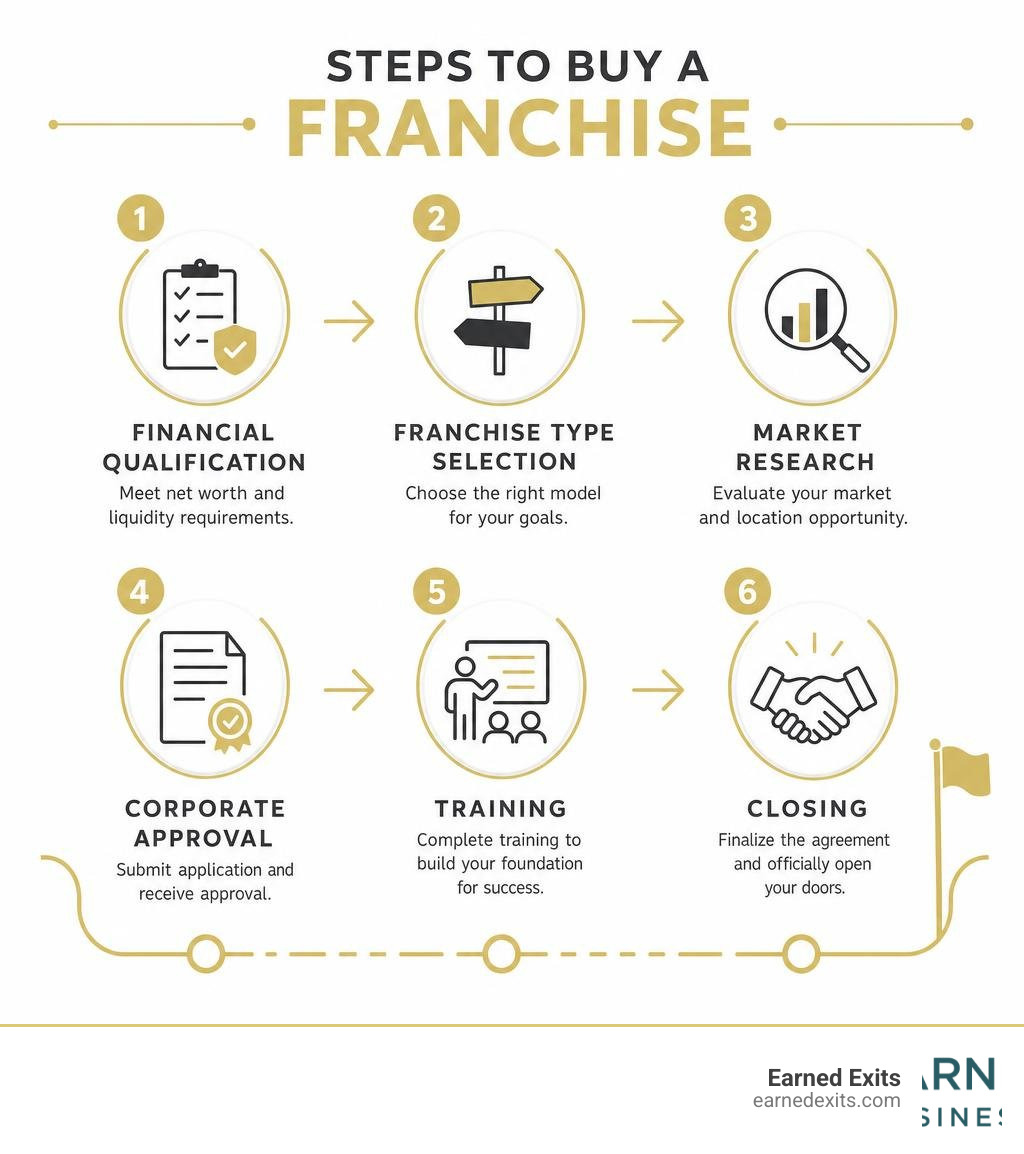
Before you start looking at a specific Dairy Queen for sale, you must ensure you meet the financial benchmarks set by International Dairy Queen (IDQ). The brand is highly protective of its system and will not approve buyers who do not meet their strict net worth and liquidity requirements.
For a single-unit Dairy Queen, you must possess a minimum liquid capital of $400,000 and a minimum net worth of $750,000. If you are planning a multi-unit acquisition, these requirements scale up significantly.
If you decide to build a brand-new location, the initial franchise fee is $45,000, and the total investment range is between $1,510,100 and $2,550,100. When buying an existing location, the purchase price varies, but you must still prove you have the liquidity to handle the purchase, transition costs, and initial working capital.
Additionally, ongoing fees are a major factor in your long-term profitability. Dairy Queen operates on a standard 20-year franchise agreement. During this term, you will pay:
- An ongoing royalty fee of 4% of gross sales.
- An ongoing marketing fee of 5% to 6% of gross sales.
To put this in perspective, let’s compare the typical costs associated with the two primary Dairy Queen concepts:
| Cost Component | DQ Grill & Chill® | DQ® Treat-Only / Treat Center |
|---|---|---|
| Initial Franchise Fee | $45,000 | $25,000 |
| Total Investment Range | $1,510,100 – $2,550,100 | $300,000 – $800,000 (Typical) |
| Minimum Liquid Capital | $400,000 | $150,000 – $200,000 |
| Minimum Net Worth | $750,000 | $300,000 – $400,000 |
| Operational Footprint | Freestanding with drive-thru (~2,000–3,000 SF) | Mall, strip center, or kiosk (<1,500 SF) |
The Grill & Chill model represents the brand’s flagship offering, blending a full hot food menu with their iconic soft-serve treats. While the startup costs are higher, the revenue potential is vastly superior. If you are looking to review available territories or start the process for a new build, you can check the DQ Franchise Opportunity portal to see what markets are currently open.
Evaluating a Dairy Queen for Sale: Valuation and Earnings Potential
When evaluating a Dairy Queen for sale, you aren’t just buying ice cream machines and cash registers; you are buying a stream of cash flow. To determine if a listing is priced fairly, you must look closely at its earnings—specifically Seller’s Discretionary Earnings (SDE) and Earnings Before Interest, Taxes, Depreciation, and Amortization (EBITDA).
On the resale market, a Dairy Queen franchise typically sells for 2 to 4 times its annual SDE. However, the valuation multiple is heavily influenced by whether real estate is included in the sale:
- DQ Grill & Chill (with Real Estate owned): Sells for 3.0x to 4.5x SDE.
- DQ Grill & Chill (Leased Land/Building): Sells for 2.0x to 3.5x SDE.
- DQ Treat-only (Leased): Sells for 1.5x to 2.5x SDE.
Let’s look at some real-world market examples to see how these valuations play out across different regions:
- Tallahassee, Florida: A freestanding location with a drive-thru generating $1.3 million in annual gross sales. Under an absentee owner model, it delivers an EBITDA of $289,000 to $348,000. For an active owner-operator, the EBITDA climbs to $345,000 to $409,000 due to manager salary add-backs. It operates under an Absolute NNN ground lease of $6,000 per month.
- Illinois: A long-standing Grill & Chill listed for $1,689,000, which includes the physical real estate valued at $1,100,000. It generates $797,729 in annual gross revenue and $221,298 in EBITDA. This is a classic example of a dual-asset sale where the real estate provides a strong equity cushion for the buyer.
- Brownsville, Kentucky: A high-volume unit located along a primary commercial highway. It boasts an annual total income of approximately $1.34 million and an adjusted EBITDA of $188,000. The location benefits from a favorable NNN lease (annual rent is 7.9% of total income) and seasonal tourist traffic from a nearby national park.
- Bermuda Dunes, California: A smaller, 1,350-square-foot location with projected gross sales of $589,307 and an owner profit of $104,977, listed at an asking price of $495,000.
As you can see, the financial profile shifts dramatically based on location, footprint, and management style. For instance, a small-town drive-thru can sometimes outperform a suburban location due to lower local overhead and less immediate competition. A prime example of this dynamic is our Sundaes Best Dairy Queen drive-thru listing, which leverages small-town charm and a dedicated drive-thru to generate impressive, consistent cash flow.
Buying an Existing Dairy Queen vs. Opening a New Location
One of the first strategic decisions you must make is whether to purchase an existing Dairy Queen for sale or build a brand-new store from the ground up. Both routes have clear advantages and distinct challenges.
The Case for Buying an Existing Resale (Turnkey Operations)
Acquiring an established resale is generally considered a lower-risk entry point. Here is why:
- Immediate Cash Flow: From day one, you have revenue coming through the register.
- Established Customer Base: The local community already knows the location. You don’t have to spend months building brand awareness.
- Trained Staff: Finding and training reliable staff is one of the hardest parts of running a quick-service restaurant (QSR). A resale typically comes with a fully functioning team, including shift leaders and assistant managers.
- Shorter Timeline: A resale transaction usually closes in 6 to 12 months, whereas building a new store can take 12 to 18+ months due to permitting, zoning, and construction delays.
The Case for Building New
Building a new location allows you to select the perfect site and construct a facility optimized for modern QSR standards. If you are trying to decide which route fits your investment goals, reviewing the data on Should I open or buy a Dairy Queen franchise in 2027? · Real FDD Numbers + Decision Tree (2027) — Pulse Franchises and Business Evaluations can help clarify your path.
If you decide that acquiring an existing business is the right move for your portfolio, you can browse active opportunities on our Buy a Business page to see what is currently available.
The Franchise Transfer and Corporate Approval Process
Buying a franchise is not like buying an independent mom-and-pop business. You cannot simply hand over a check to the seller and take the keys. International Dairy Queen (IDQ) acts as a strict gatekeeper, and the transfer process is highly regulated.
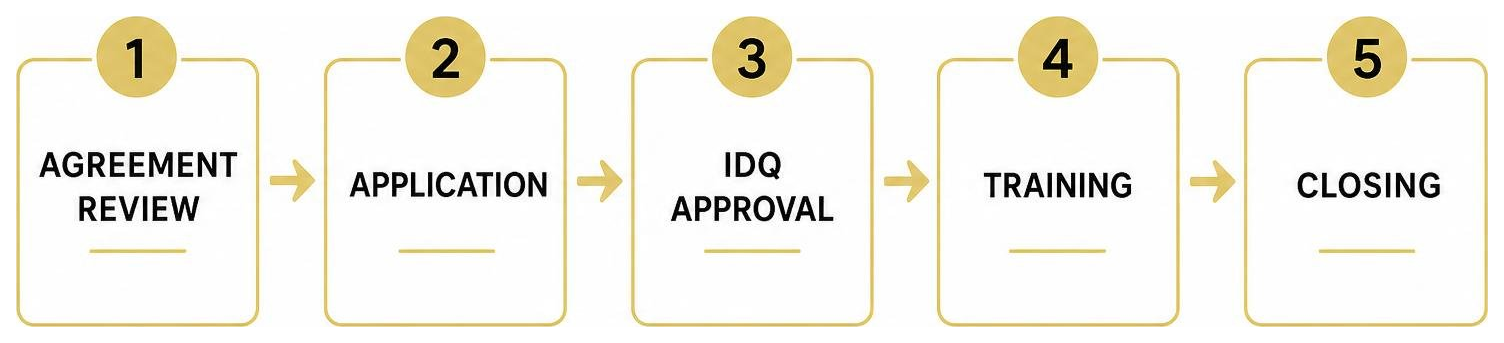
Once you and the seller agree on a purchase price and sign a letter of intent, the corporate approval sequence begins. This process typically takes 60 to 90 days and involves several critical steps:
- Application and Financial Vetting: You must submit a formal application to IDQ proving you meet the $750,000 net worth and $400,000 liquid capital requirements.
- Background and Experience Review: IDQ prefers buyers with previous restaurant management or multi-unit hospitality experience.
- The Right of First Refusal (ROFR): Almost all franchise agreements contain an ROFR clause. This gives IDQ the right to step in and purchase the restaurant from the seller under the exact same terms you negotiated. While they rarely exercise this, you must wait out the contractual window (usually 30 days) for them to waive it.
- Transfer Fees: The buyer or seller (depending on who negotiated the cost) must pay a corporate transfer fee, which typically ranges from $5,000 to $10,000.
- Mandatory Training: Once conditionally approved, you must complete up to 4 to 8 weeks of mandatory training at an official DQ training facility. If you do not pass this training, the deal is dead.
- The 3-Manager Rule: IDQ requires every operating location to have at least three certified managers on staff. As the new owner, you must ensure your location meets this operational standard before you can officially take over.
Navigating this corporate gauntlet requires careful planning. To ensure you don’t drop the ball during the transition, we highly recommend reading our guide on Ensuring a Smooth Handover to prepare your operational checklist. For professional assistance with the transaction, you can also consult with experienced business brokers who specialize in food franchise sales.
Financing Options and Common Pitfalls to Avoid
Because Dairy Queen is an established national brand with a high success rate, securing financing is generally easier than it would be for an independent restaurant.
The most common financing vehicle is an SBA 7(a) loan, which can cover up to $5 million for franchise acquisitions. For qualified buyers, SBA loans can secure the purchase with a down payment of just 10% to 15%. However, you must still have enough personal liquid capital left over to meet IDQ’s post-closing requirements.
Despite the brand’s strength, buyers frequently fall into expensive traps. Here are the most common pitfalls to avoid:
- Ignoring the Product Improvement Plan (PIP): When a franchise changes hands, IDQ will inspect the facility and issue a PIP. This document details all the mandatory upgrades required to bring the store up to modern brand standards. A major remodel can easily cost $100,000 to $250,000. If you don’t negotiate who pays for these upgrades before closing, you will be stuck with a massive surprise bill.
- Failing to Verify Lease Assignability: If the business is on leased land, you must ensure the lease is fully assignable to you and has enough remaining term (ideally 10+ years with renewal options) to satisfy both your lender and IDQ.
- Overlooking Inventory and Working Capital: The asking price of a Dairy Queen for sale usually excludes inventory. You will need to pay cash at closing for the food, paper goods, and uniform stock on hand (typically $5,000 to $10,000).
When structuring these transactions, some buyers attempt to use performance-based structures to mitigate risk. If you are considering this approach, make sure to read The Ultimate Guide to Structuring and Negotiating Earnouts to understand how to protect your investment.
Best Geographic Markets for Dairy Queen Investment in 2027
As we look ahead to 2027, geographic placement is becoming more critical to QSR success. While ice cream is loved everywhere, certain markets offer significantly better returns on investment.
- Warm-Weather Markets: States like Florida, California, and Texas offer year-round demand that flattens out the classic seasonal dip that northern locations experience.
- Underserved Rural and County-Seat Markets: In many small towns throughout the Midwest and South, Dairy Queen is not just a place to get a soft-serve cone—it is the primary community gathering spot and one of the only national food brands in the county. These locations often enjoy incredibly loyal customer bases and lower labor costs.
- High-Traffic Highway Corridors: Locations situated near major interstate exits or popular regional tourist destinations (such as national parks) benefit from a constant stream of travelers.
For example, checking regional footprints like Dairy Queen Locations in Arkansas can show you how deeply embedded the brand is in Southern communities. If you are looking to expand into new territories, you can also review the Available Markets | DQ® Franchise Opportunity map or see if there are unique expansion opportunities in remote but profitable regions like Dairy Queen Locations in Alaska | DairyQueen.com.
Frequently Asked Questions About Buying a Dairy Queen
If you are beginning your due diligence journey, you likely have several practical questions. You can browse active marketplace listings on Dairy Queen Restaurants For Sale or look at broader regional QSR opportunities on Restaurants and Food Businesses For Sale in Connecticut to get a sense of what is currently on the market.
Here are the answers to the most common questions we receive:
How much does a Dairy Queen for Sale typically cost on the resale market?
Resale prices vary widely based on financial performance and real estate inclusion. A mall-based Treat-only center can sell for as little as $62,500, while a high-performing freestanding Grill & Chill with a drive-thru and owned real estate can easily command $1.5 million to $2.5 million. On average, expect to pay a multiple of 2 to 4 times the annual Seller’s Discretionary Earnings (SDE).
What is the average EBITDA for a Dairy Queen for Sale?
A standard, well-run Dairy Queen Grill & Chill typically generates an annual EBITDA between $150,000 and $350,000. High-volume locations in prime markets can exceed $400,000 in owner-operator cash flow. Treat-only locations in malls generally have lower overhead but lower earnings, typically ranging from $50,000 to $120,000 annually.
How long does the Dairy Queen franchise transfer process take?
The entire process—from signing the initial asset purchase agreement to officially taking over store operations—typically takes 6 to 12 months. This timeline includes 30 days for IDQ to waive its Right of First Refusal, 60 to 90 days for corporate financial approval, and 4 to 8 weeks of mandatory buyer training.
Conclusion
Buying a Dairy Queen franchise is a proven path to business ownership, backed by an iconic brand with incredible consumer loyalty. However, navigating the financial requirements, corporate vetting, and transition logistics requires a structured, professional approach.
At Earned Exits, we specialize in helping entrepreneurs buy and sell businesses with confidence. We provide thorough CFO-level due diligence support, clear communication, and efficient transaction tools to ensure your franchise acquisition is seamless from start to finish.
Whether you are looking to buy your first location or planning to Sell Your DQ to prepare for your next chapter, we are here to help. To explore how we can support your business transition, check out our Listings page, learn more about our Business Brokerage Services, or start the process today by visiting our Sell My Business portal.
For more insights on preparing for a successful business transaction, you can also read our guides on Selling Your Business Crafting a Meaningful Exit Beyond Just the Price and our proven 10 Stepselling Process.
