


The Top Marketplaces to Buy and Sell Businesses
Essential Steps to Buy Sell Business Transactions Successfully
Navigating a buy sell business deal requires a clear roadmap, whether you are preparing your company for exit or searching for your next acquisition. The market in 2026 is faster and more data-driven than ever, but the fundamental mechanics of deal structuring remain rooted in proper preparation and process discipline.
On average, it takes 6 to 12 months to sell a small business. Having a structured deal execution plan prevents deal fatigue and protects transaction value.
When structuring a buy sell business transaction, we break the process into four distinct phases:
- Seller Preparation and Financial Cleanup: Before listing, clean up balance sheets, organize tax returns for the past three to five years, and eliminate personal expenses from company books.
- Market Launch and Buyer Outreach: Launch a confidential marketing campaign using a blind profile to attract vetted buyers without alerting competitors, employees, or vendors.
- Offer Negotiation and Deal Structuring: Evaluate Letter of Intent (LOI) submissions. Key elements include purchase price, asset vs. stock purchase designation, seller financing terms, earnouts, and working capital pegs.
- Due Diligence and Closing: The buyer conducts formal financial, legal, and operational due diligence before legal counsel drafts definitive purchase agreements.
To review a complete breakdown of each phase, read our guide on How to Sell a Business Steps to a Smooth Exit.
How to Buy Sell Business Assets with Accurate Valuation
Determining the true market value of a business is the critical bridge between buyers and sellers. In the current 2026 market, median small business sale prices range between $200,000 and $500,000, depending on revenue stability, geography, and industry sector.
To establish an accurate listing or offer price, we rely on core valuation methodologies:
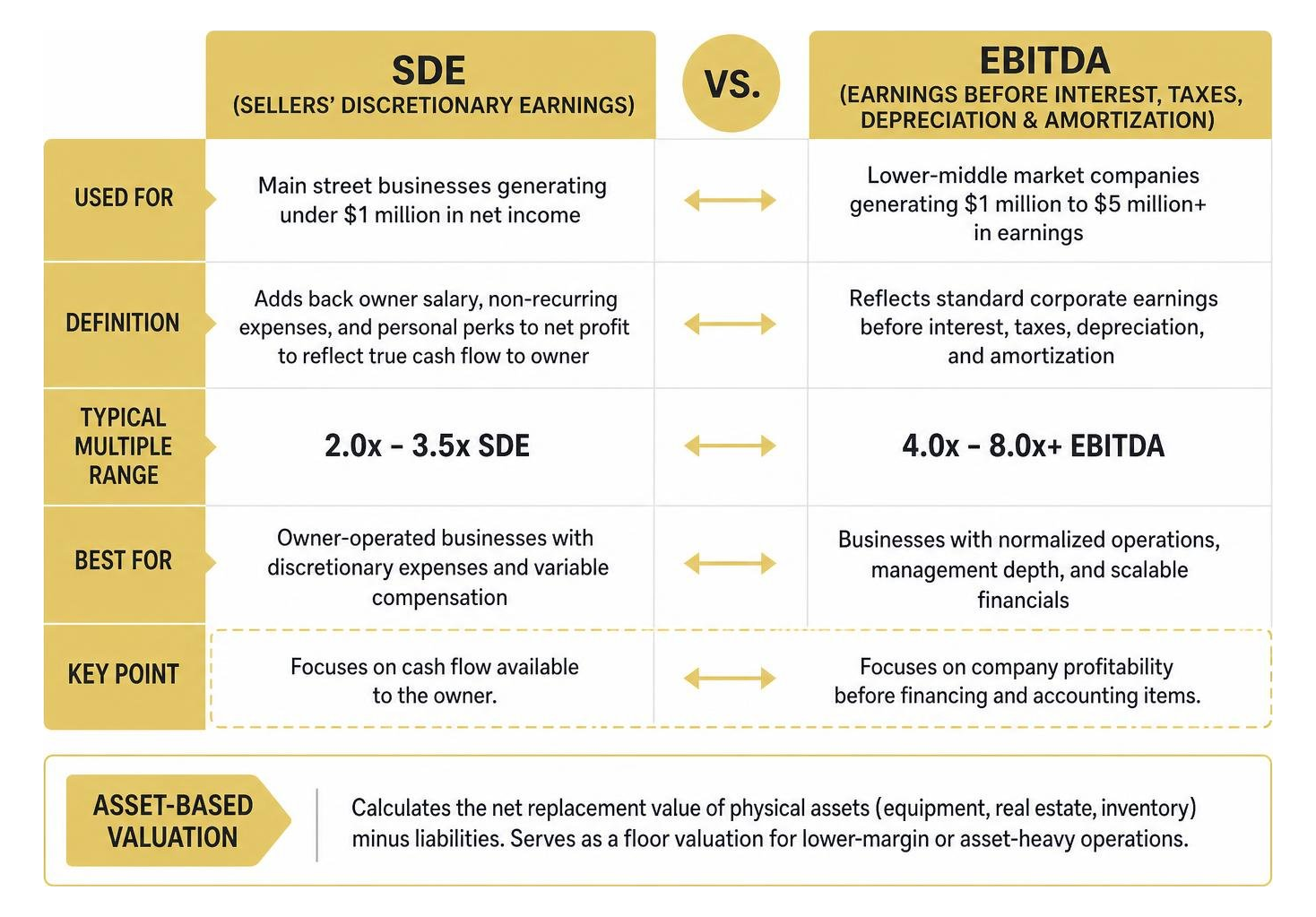
- Sellers’ Discretionary Earnings (SDE) Multiples: Used primarily for main street businesses generating under $1 million in net income. SDE adds back owner salary, non-recurring expenses, and personal perks to net profit. Most small businesses sell for 2.0x to 3.5x SDE.
- EBITDA Multiples: Standard for lower-middle market companies generating $1 million to $5 million+ in earnings. EBITDA reflects standard corporate earnings before interest, taxes, depreciation, and amortization. Multiples typically range from 4.0x to 8.0x+ depending on growth rate and operational stability.
- Asset-Based Valuation: Calculates the net replacement value of physical assets (equipment, real estate, inventory) minus liabilities. This serves as a floor valuation for lower-margin or asset-heavy operations.
Pricing a business accurately requires deep market analysis. For an in-depth breakdown of these techniques, explore The Ultimate Guide to Small Business Valuation Methods and The Definitive Guide to Business Valuation. You can also request a confidential Free Business Valuation through our team.
Navigating Financial and Legal Due Diligence
Due diligence is where transactions are validated or lost. During this phase, buyers verify every financial record, contractual obligation, and operational metric presented during initial discussions.
Key due diligence focus areas include:
- Financial Audits & Tax Records: Reconciling bank statements against tax filings (Form 1120S, Schedule C, or Form 1065) and Quality of Earnings (QofE) reports.
- Legal Contracts & Customer Concentrations: Reviewing vendor agreements, customer contracts, non-competes, and ensuring no single client accounts for more than 15-20% of total revenue.
- Lease Agreements & Property Terms: Ensuring commercial facility leases are assignable or transferable under favorable terms.
- Asset Transfers & Title Verifications: Ensuring equipment, intellectual property, and brand trademarks are clean of unrecorded liens.
Buyers learning how to evaluate acquisition targets should read How to Pick the Right Business to Buy Finding Your Perfect Match and explore our curated active Listings.
Top Marketplaces and Channels for Business Sales
Choosing the right digital platform or advisory route dictates the volume and quality of buyers you attract. Over 70% of business owners who list their business for sale use online marketplaces to locate prospective buyers. However, the channel you select should align with your business size, privacy requirements, and structural complexity.
| Channel / Platform Type | Target Deal Size | Key Advantages | Confidentiality Control | Advisory Support |
|---|---|---|---|---|
| General Marketplaces | $50K – $1M | High traffic, massive buyer pool | Low to Medium | DIY / Self-managed |
| SaaS & Tech Marketplaces | $100K – $5M | Vetted tech buyers, streamlined metrics | Medium | Minimal |
| Commercial Property Portals | $500K – $10M+ | Combines real estate with operating assets | Medium | Varies |
| Full-Service Advisory (Earned Exits) | $1M – $40M | Qualified buyer network, CFO support, maximum price | Maximum (100% Confidential) | Dedicated M&A Team |
For a broader look at digital selling channels, check out The Definitive Guide to Selling Business Online.
Marketing Your Listing to Serious Buyers
Broad public exposure can destroy a business if competitors, employees, or customers find out it is for sale prematurely. Effective marketing requires creating compelling collateral while preserving total confidentiality.

When marketing a buy sell business asset, professional advisors utilize:
- Blind Teaser Profiles: One-page summaries highlighting financial performance, growth potential, and industry position without disclosing company names, specific addresses, or identifiable branding.
- Non-Disclosure Agreements (NDAs): Enforceable electronic NDAs signed before buyers receive the Confidential Information Memorandum (CIM).
- Buyer Vetting Procedures: Requesting Proof of Funds (POF) or acquisition capability documentation before granting access to sensitive data rooms.
To discover cost-effective promotional strategies, consult The Best Ways to Sell Your Business Online Without Paying a Cent and our foundational Beginners Guide to Selling a Business.
Regional Opportunities in Key Buy Sell Business Markets
Geographic demand plays a major role in deal velocity and multiples. Regional migration and economic trends across the United States have created high-demand buyer corridors in several key states.
For buyers and sellers evaluating regional opportunities, explore active listings and local conditions across key markets:
- Evaluate growth markets across key regions like Arizona, Colorado, and Alaska.
- Compare commercial footprint needs against corporate retail nodes like Best Buy locations when assessing retail corridor foot traffic.
Buyers interested in acquiring an existing business can browse current nationwide acquisition options at Buy a Business.
Common Pitfalls to Avoid in Buy-Sell Deals
Even profitable businesses can fail to close if common transaction traps are not managed early. Over 80% of successful business sales involve a professional broker or intermediary to navigate these friction points.
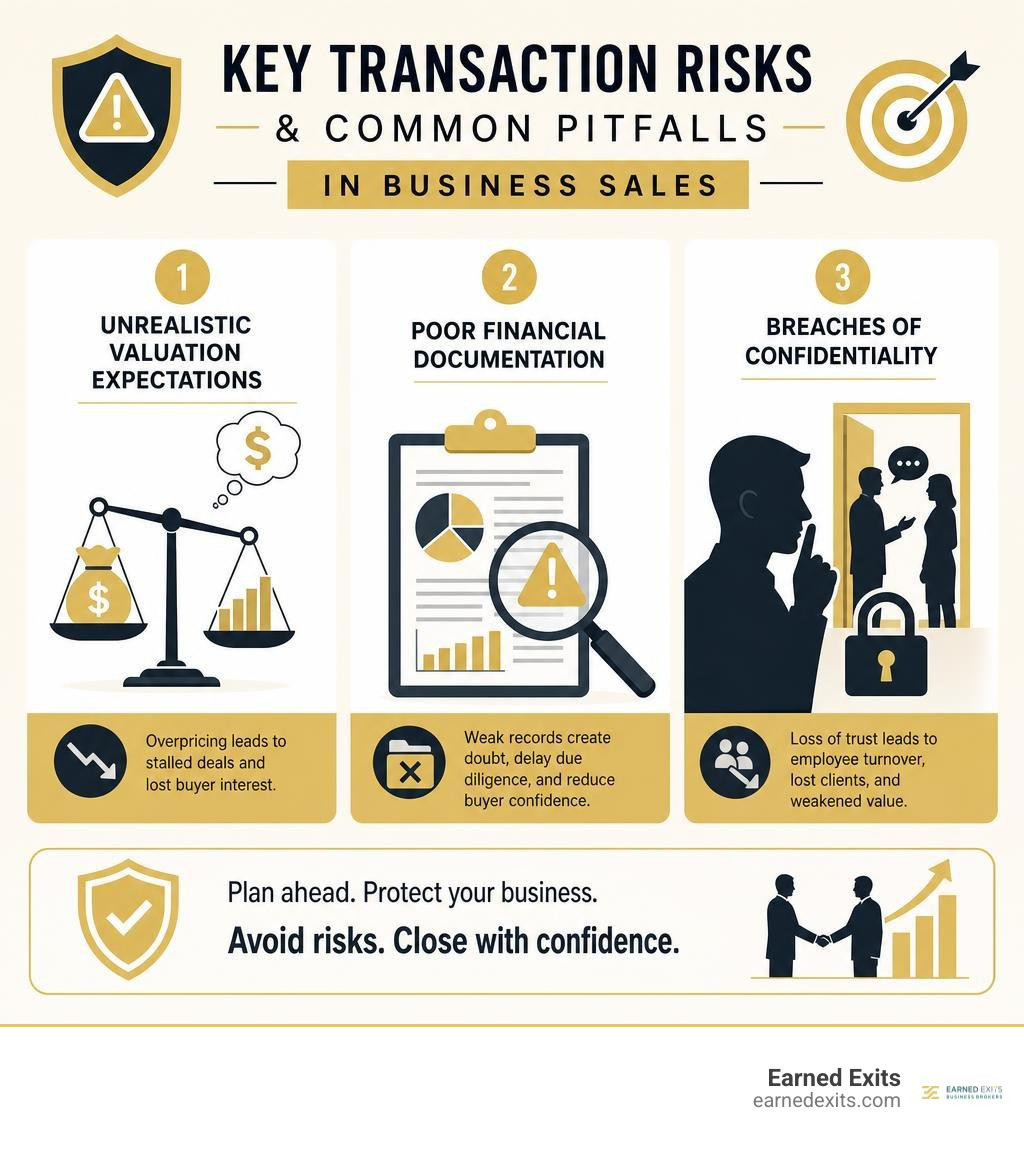
Common risks in buy sell business deals include:
- Unrealistic Valuation Expectations: Overpricing based on emotional attachment rather than objective market multiples (SDE/EBITDA).
- Poor Financial Documentation: Commingling personal and business accounts, unverified cash income, or delayed quarterly financial statements.
- Breaches of Confidentiality: Leaking sale intentions to staff or competitors, causing employee turnover or lost accounts.
- Buyer Fatigue and Extended Closing Timelines: Unorganized due diligence responses that stretch deal timelines past 9 months, causing buyer burnout or changing market conditions.
- Inflexible Deal Structures: Insisting on 100% cash at closing when reasonable seller financing or earnouts could bridges valuation gaps.
Avoid these risks by choosing professional advisory support. Read The Ultimate Guide to Hiring a Professional Business Broker, review 10 Questions to Ask a Business Broker Choosing the Right Partner for a Meaningful Exit, or compare market options in The 5 Best Business Brokers Compared.
Frequently Asked Questions About Buying and Selling Businesses
How long does it usually take to buy or sell a business?
On average, a business sale takes 6 to 12 months from the initial valuation to closing. The timeline depends heavily on financial readiness, asking price accuracy, industry demand, and responsiveness during due diligence. Highly organized companies with clean records and professional M&A representation often close significantly faster.
Why is professional advisory crucial in business sales?
Over 80% of successful sales involve a broker or advisor because managing deal negotiation, financial recasting, legal coordination, and buyer vetting requires dedicated execution. Professional advisors insulate business owners from negotiation friction while keeping the operating business healthy during marketing. Explore our hands-on Business Brokerage Services to learn how we manage this entire lifecycle.
How do online marketplaces differ from full-service brokers?
Online marketplaces function primarily as listing directories where buyers and sellers connect directly. You are responsible for pricing, negotiating, legal contracts, and due diligence management. Full-service brokers provide comprehensive representation: professional valuations, full buyer qualification, structured deal management, CFO support, and legal closing support to ensure high success rates.
Conclusion
Navigating a buy sell business transaction in 2026 demands strategic preparation, accurate pricing, and absolute confidentiality. Whether you are using online listing platforms for initial research or preparing for a lower-middle market company exit, aligning with experienced advisors transforms a stressful negotiation into a smooth, lucrative closing.
At Earned Exits, we combine organized process management, thorough CFO/due diligence support, and deep market reach to deliver maximum exit value for our clients.

Ready to start your transaction journey? Take the next step today:
- Speak with our exit advisory team at Sell My Business or Sell My Business 2
- Learn more about our complete advisory solutions at Business Brokerage Services
