


The Best Ways to Sell Your Business Online Without Paying a Cent
You Can Sell Your Business Online Without Paying a Broker — Here’s How
How to sell your business online for free is simpler than most first-time sellers expect. Here’s a quick overview of the most effective ways to do it:
- List on free business marketplaces — Specialized online platforms let you create a listing at zero cost, with no commission on the sale.
- Use social media and online communities — Facebook groups, LinkedIn, and Reddit communities connect sellers directly with motivated buyers.
- Market your listing yourself — Direct outreach via email and LinkedIn can generate serious buyer interest without paying anyone.
- Communicate and negotiate directly — No broker in the middle means you keep 100% of your sale price.
Selling a business is one of the biggest financial decisions you’ll ever make. And if you’re doing it for the first time, the process can feel overwhelming — unfamiliar terms, mountains of paperwork, and the fear of leaving money on the table.
Here’s what surprises most sellers: you don’t have to pay a broker thousands of dollars to find a buyer.
Traditional business brokers typically charge 8–12% of your sale price. On a $500,000 deal, that’s up to $60,000 gone before you even get started.
Free online platforms have changed the game. Some let you go live with a listing in under 30 minutes, with instant access to pools of over 100,000 active buyers. Others connect you directly with investor communities — no middleman, no commission, no hidden fees.
That said, free doesn’t mean effortless. DIY selling requires preparation, discipline, and smart outreach. Done right, though, it can save you a significant sum while keeping you in full control of your exit.
This guide walks you through exactly how to do it — step by step.
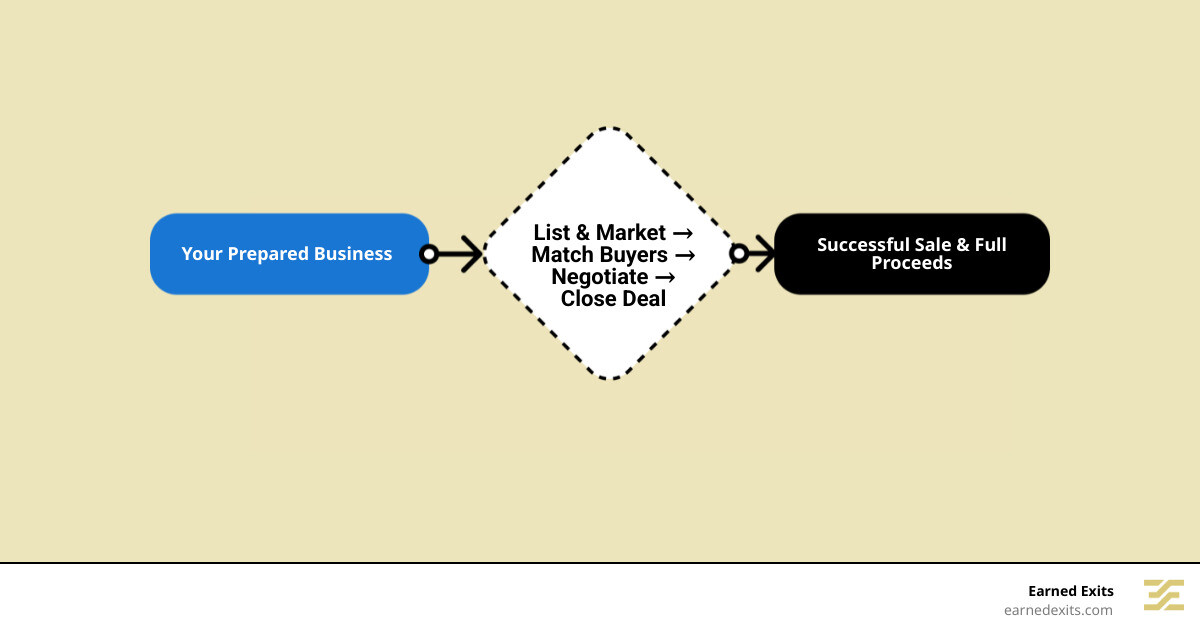
Top Platforms to Sell Your Business Online for Free
When you decide to take the DIY route, your first question is likely: “Where do I actually put my listing?” Fortunately, the digital landscape is teeming with high-traffic marketplaces that don’t charge a dime for basic listings or success fees.
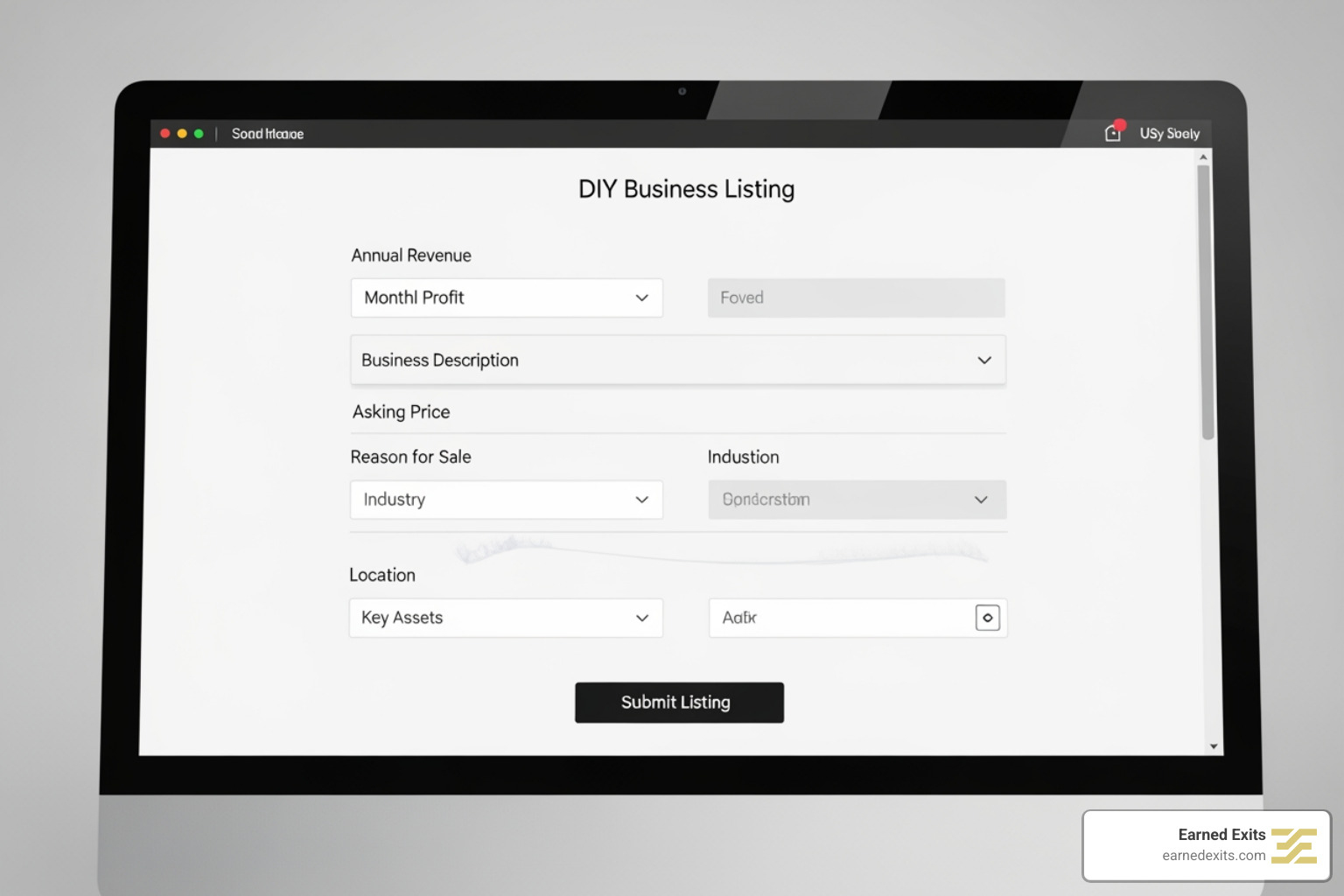
Specialized Digital Asset and Business Listing Boards
If you are running an online-based company, several platforms cater specifically to you. These sites often monetize through optional premium upgrades or buyer-side fees, allowing you to list for $0.
- Curated Marketplaces: These are ideal for profitable online businesses. To list for free, your business typically needs a verifiable history and a minimum monthly profit. They offer direct communication with qualified buyers.
- High-Volume Marketplaces: These platforms are built for speed, often allowing you to get your business on the market in less than 30 minutes. They use automatic matching to pair your business with interested parties from large buyer pools.
- AI-Powered Platforms: Certain platforms cover all 50 states and have seen thousands of businesses listed with zero cost. Some even offer AI-powered document upload tools to help you build your listing faster.
- Indie Maker Classifieds: Perfect for SaaS apps, e-commerce sites, or blogs that are side projects or MVPs. These classifieds-style sites are often free with no commissions.
- Micro-Startup Boards: These are ideal for smaller ventures, often valued under $25k, focusing on niche tools and micro-SaaS.
- Small Business Apps: Other options exist for small online businesses under $100k, offering in-app chat to keep your communication centralized.
Social Media and Entrepreneur Communities
Sometimes the best buyer isn’t browsing a marketplace; they are scrolling through their feed or participating in a forum.
- Facebook Groups: Groups like Flipping Websites (21k+ members) and Niche Website Flippers (11k+ members) are goldmines for finding buyers for content sites and small digital brands.
- Reddit: Subreddits like r/BuySellWebsites allow you to post your project for free. It’s a raw, direct way to connect with tech-savvy investors.
- Forums: Long-standing communities like Digital Point Forums have dedicated “Sites for Sale” sections that remain popular for hobby sites and starter projects.
Comparison of Free Listing Options
| Platform Type | Best For | Typical Reach | Key Benefit |
|---|---|---|---|
| Curated Marketplace | Profitable Online Biz | 25k+ Vetted Buyers | High trust, no success fees |
| Mass Marketplace | Main St. & Digital | 100k+ Buyers | Instant matching, high volume |
| Niche/Micro Boards | SaaS, MVPs, Side Projects | Indie Makers | No revenue minimums often |
| Social/Forums | Small Sites, Domains | Community Members | Direct, informal, fast |
Step-by-Step: How to Sell Your Business Online for Free
Selling your business is a marathon, not a sprint. Even on free platforms, you need a professional approach to be taken seriously. At Earned Exits, we advocate for a 10-step selling process that ensures you don’t miss critical details.
1. Preparation and Valuation
Before you type a single word of your listing, you must know what your business is worth. Most DIY sellers price based on “gut feeling,” which is a recipe for failure. You should look at EBITDA multiples—essentially a calculation of your earnings before interest, taxes, depreciation, and amortization.
For example, SaaS companies might sell for 5-8x EBITDA, while service businesses often land between 2-3.5x. You can use free valuation tools provided by various online business marketplaces to get a ballpark figure based on real market data.
2. Organize Your Documentation
Buyers will want to see the “receipts.” If you can’t prove your numbers, you don’t have a sale. This is where our business-brokerage-services often help sellers who are struggling to get their “ducks in a row.” You need clean Profit & Loss (P&L) statements and tax returns.
3. Creating the Listing
This is your sales pitch. You aren’t just selling a cash-flow stream; you’re selling a future opportunity. We’ll dive deeper into the “how-to” of listing creation in the next section.
4. Buyer Screening and Negotiation
Once the inquiries roll in, you must separate the “tire-kickers” from the serious investors. Ask for proof of funds and industry experience before sharing sensitive data.
Preparing Financials for a Free Online Sale
When learning how to sell your business online for free, your financials are your most important asset. Buyers typically look for a “Trailing Twelve Months” (TTM) view of your business.
- P&L Statements: At a minimum, have your most recent full year and your year-to-date (YTD) statements ready.
- Revenue Stickiness: Buyers love predictable income. Are your customers on long-term contracts or month-to-month? High revenue stickiness commands a higher price.
- Customer Concentration: If 70% of your revenue comes from one client, that’s a red flag. Aim to show that your revenue is spread across many accounts.
- Verify Your “DQ”: Before going to market, it’s wise to sell-your-dq (Deal Quality) by ensuring your records are transparent. Transparency builds trust, and trust closes deals.
Creating a Listing to Sell Your Business Online for Free
A high-converting listing is the difference between a sale in 30 days and a listing that sits for a year. To sell-my-business effectively, your listing must answer three questions in the first 10 seconds:
- What does the business do? (Be specific: “SaaS for dental clinics,” not “software company.”)
- How much does it make? (List gross revenue and net profit clearly.)
- Why are you selling? (Common reasons include “focusing on other projects” or “retirement.”)
Pro Tip: Use high-quality visual assets. If it’s a physical business, take professional photos. If it’s digital, provide screenshots of your dashboard or traffic analytics. Avoid hype and exaggeration; concrete numbers like “85% customer retention rate” are far more persuasive than “everyone loves us!”
Marketing and Outreach Strategies for DIY Sellers
Listing your business for free is only half the battle. To find the best buyer, you need to be proactive.
LinkedIn Networking
LinkedIn is arguably the most powerful free tool for B2B sales. You shouldn’t just post “Business for Sale” on your profile. Instead, leverage LinkedIn for B2B lead generation by joining 5-10 industry-specific groups. Share one key metric or a success story weekly to build credibility. A manufacturing owner who shares quarterly growth stats is much more likely to attract a strategic buyer than one who stays silent.
Warm Outreach vs. Cold Email
Don’t underestimate your own network. Warm outreach vs cold email statistics show that warm contacts (people you know or who are in your industry) have a 10-34% response rate, compared to just 2-10% for cold emails. Reach out to competitors, suppliers, or even loyal customers. They already understand the value of what you’ve built.
Lead Generation Timing
Budget your time wisely. Successful DIY sellers often spend 4–6 hours per week on outreach during the first three months. If you haven’t received a serious inquiry after six weeks, the market is telling you something—usually that your price is too high or your description is too vague. Don’t be afraid to adjust. You can view current listings to see how others are positioning themselves in the current market.
Protecting Confidentiality and Managing the Deal
One of the biggest risks of selling for free online is the “leak.” If your employees, customers, or competitors find out you’re selling before the deal is done, it can devalue the business.
The Power of the NDA
Never, ever share full financial statements or customer lists without a signed non-disclosure agreement (NDA). Most free platforms allow you to list “confidentially,” meaning you don’t reveal the name of the business until a buyer has been screened. We call this the art of confidentiality, and it is vital for protecting your legacy.
Qualifying Buyers
Before you spend hours on Zoom calls, qualify your prospects. Ask:
- Do they have the capital?
- Do they have relevant experience?
- What is their timeline for acquisition?
Once you have a solid lead, you’ll move into sealing the deal. This involves evaluating offers not just on the “sticker price,” but on the terms (e.g., cash at closing vs. seller financing).
The Handover
A successful sale isn’t finished when the contract is signed; it’s finished when the buyer is successfully running the show. Ensuring a smooth handover usually involves a training period of 30 to 90 days.
Frequently Asked Questions about Free Business Sales
Is selling a business online truly free or are there hidden fees?
For many free marketplaces, the basic listing and the sale itself are truly zero-commission for DIY sellers. These marketplaces typically make money by charging buyers a membership fee or offering sellers optional “boosts” to get more visibility.
When you craft a meaningful exit, while the listing is free, you may still have costs for an attorney to review the final sales agreement or an accountant to clean up your books. These are investments in a safe transaction.
How long does it typically take to sell a business on free marketplaces?
On average, it takes over 100 days to sell a business online. However, this varies wildly. A high-quality, small content site might sell in a week, while a complex manufacturing plant could take a year.
If you’re in a rush, this is often where a business broker elevates your strategy by tapping into private networks that don’t rely on public marketplace algorithms.
Can I list my business on multiple free platforms simultaneously?
Yes! Unlike many traditional brokers who require a 6-month exclusivity agreement, free DIY platforms generally allow you to list wherever you like. This “wide net” approach is great for exposure. Just be sure to manage your listings carefully—if you sell the business on one site, you must manually remove it from the others immediately to avoid wasting buyers’ time.
Conclusion
Learning how to sell your business online for free is an empowering journey that can save you tens of thousands of dollars in commission fees. By leveraging free online marketplaces, utilizing LinkedIn for outreach, and keeping your financials airtight, you can find a buyer who values what you’ve built.
However, the DIY path isn’t for everyone. It requires a significant time commitment and a high degree of organization. Sometimes, selling your business on your own is a risk you don’t want to take, especially if the deal is large or legally complex.
If you find yourself overwhelmed by the technicalities of due diligence or the stress of negotiation, we are here to help. At Earned Exits, we specialize in making the transition as seamless and profitable as possible.
Ready to see what your next chapter looks like? Start your journey with us today.
