


The Best Business Brokerage Companies for Your Next Big Move
Why Choosing the Right Business Brokerage Companies Changes Everything
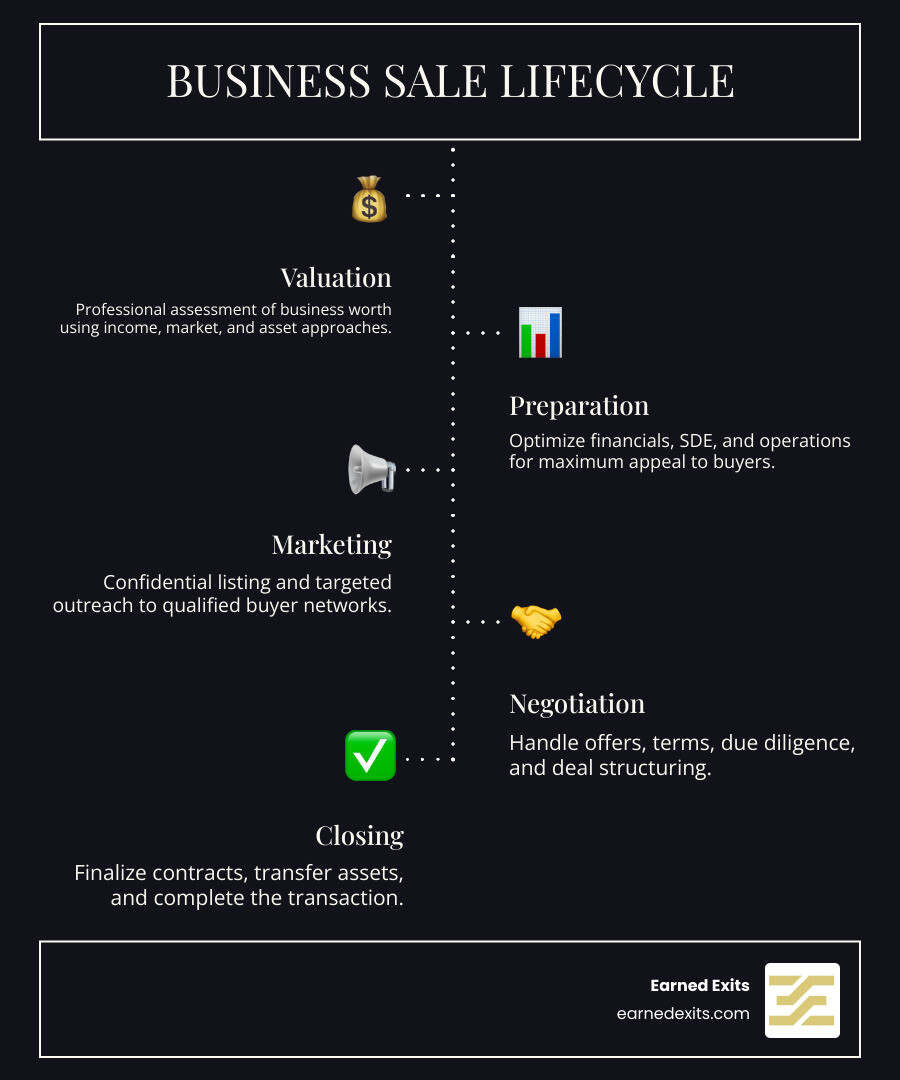
Business brokerage companies are specialized firms that guide business owners through the process of selling or buying a business — handling everything from valuation and marketing to negotiations and closing.
If you’re looking for the best options, top business brokerage companies are typically recognized for their performance, network, and track record in these key areas:
- National Brokerage Networks – Large organizations with extensive reach, strong in Main Street and middle market deals.
- M&A Advisory Firms – Groups known for professional valuations and structured advisory for larger transactions.
- Digital & Tech Specialists – Firms focusing on digital, e-commerce, and technology-driven business sales.
- Main Street Experts – Localized brokers who understand the nuances of community-based small businesses.
- Industry-Specific Boutiques – Specialists in sectors like manufacturing, construction, or healthcare.
- Global Intermediaries – Firms with the capacity to manage cross-border transactions and international buyer pools.
- Valuation-Centric Firms – Brokerages that prioritize data-backed appraisals and defendable market pricing.
- Confidentiality Specialists – Firms that excel in protecting seller identity through rigorous vetting and NDAs.
- Auction-Style Intermediaries – Groups that create competitive bidding environments to drive maximum value.
- Full-Service Exit Advisors – Companies providing comprehensive support from financial cleanup to final closing.
Selling your business for the first time is genuinely hard. Most owners have never done it before. The process involves financials, legal documents, buyer vetting, confidentiality agreements, negotiations, and due diligence — all at once.
That’s a lot to manage while also running your business day to day.
A good business broker takes that weight off your shoulders. But not all brokers are equal. Some specialize in small “Main Street” businesses. Others focus on mid-sized companies attracting private equity. Some have deep industry expertise in manufacturing or SaaS. Others are generalists.
The difference between the right broker and the wrong one can mean hundreds of thousands of dollars — and months of your time.
This guide breaks down what separates the best business brokerage companies from the rest, so you can make a confident, informed decision.
What Defines the Top Business Brokerage Companies?
When we look at the landscape of business brokerage companies, we aren’t just looking for someone with a real estate license and a “for sale” sign. The top-tier firms operate as sophisticated intermediaries. They act as the bridge between your years of hard work and your future financial freedom.

To be considered among the “best,” a firm must excel in several critical areas:
- Valuation Expertise: They don’t just guess a number. They use defendable, industry-standard methods to ensure your business is priced to sell without leaving money on the table.
- Confidentiality: This is the “secret sauce” of brokerage. If your employees, customers, or competitors find out you’re selling too early, it can damage the business value. Top brokers use NDAs (Non-Disclosure Agreements) and blind listings to protect you.
- Buyer Networks: The best firms have deep databases of pre-qualified buyers, including individual entrepreneurs, private equity groups, and strategic corporate buyers.
- Deal Marketing: Beyond just listing on a website, they proactively “hunt” for the right buyer through targeted outreach and digital deal marketing platforms like Axial.
Mastering the sale process is about more than just finding a buyer; it’s about managing the momentum of the deal so it doesn’t stall out during due diligence. Guiding your success requires a partner who understands that this is likely the largest financial transaction of your life.
Specialized Industry Expertise
The “generalist” broker is becoming a thing of the past. Today, the most successful exits happen when you work with specialists who speak the language of your specific industry.
- Manufacturing: These deals involve complex equipment valuations, inventory audits, and often environmental considerations. Manufacturing business brokers understand the nuances of supply chains and CAPEX.
- Construction: Selling a trade-based business requires navigating licensing transfers and project backlogs. Construction business brokers know how to value “work in progress” and skilled labor forces.
- Digital & Tech: Specialized digital brokerage firms have carved out a massive niche here. If you own a software company, you need SaaS business brokers who understand recurring revenue and churn rates. For online retail, ecommerce business brokers focus on traffic sources and platform stability.
National Reach vs. Local Expertise
Should you go with a local “mom-and-pop” broker or a massive national network? There are pros and cons to both.
National Networks offer massive databases. For example, leading national firms manage billions in listings across over a hundred territories. This reach is vital if your buyer is likely to come from another state or even another country.
Local Expertise is irreplaceable for “Main Street” businesses like restaurants or local dry cleaners. A broker in Alabama or Arizona will have relationships with local lenders and attorneys that a national call center simply won’t.
The sweet spot is often a firm that offers “National Reach, Local Expertise.” This allows you to find certified business brokers who understand your specific neighborhood but can also tap into cross-border buyer pools.
Key Differences: Main Street vs. Middle Market Specialists
In business brokerage companies, size matters. The way a $500,000 landscaping business is sold is fundamentally different from the way a $20 million manufacturing plant is sold.
| Feature | Main Street Transactions | Middle Market Transactions |
|---|---|---|
| Typical Valuation | Under $1 Million | $1 Million to $50 Million+ |
| Primary Buyer | Individual “Owner-Operators” | Private Equity, Strategic Buyers |
| Deal Structure | Often Asset Sales | Stock Purchases or Complex Mergers |
| Geographic Scope | Mostly Local | National or International |
| Financing | SBA 7(a) Loans, Seller Notes | Institutional Debt, Equity Rollover |
Main Street deals are often simpler, focusing on the “Sellers Discretionary Earnings” (SDE). Middle Market deals, however, often involve sophisticated “deal rooms,” multiple layers of due diligence, and institutional investors who are looking for platform acquisitions.
How to Evaluate and Choose the Right Business Brokerage Companies
Choosing a broker is like hiring a CEO for a six-month project. You need to vet them thoroughly.
Don’t be afraid to ask the hard questions. Industry success ratios are surprisingly low—often cited between 20% and 25%. However, high-performance brokerage firms report completing over 75% of their engagements. You want to be on the winning side of that statistic.
Here are 10 questions to ask a business broker before signing an engagement letter. Additionally, look for “vetted” advisors. Platforms like the Axial advisor directory list 1,167 business brokers and provide data on their actual closed deals, which helps separate the talkers from the closers.
Evaluating the Track Record of Business Brokerage Companies
A broker’s “listings” are just promises; their “closed deals” are the proof. When researching, look for transaction volume. For instance, some of the most successful brokerage teams have closed more than 1,200 transactions.
Check for recent activity in your sector. You can view recent transaction data to see if a firm has actually moved the needle lately. If a broker hasn’t closed a deal in your industry in three years, they might be out of touch with current market multiples.
Fee Structures Common Among Business Brokerage Companies
How do these guys get paid? Most business brokerage companies operate on a commission basis, often called a “success fee.”
- The Double Lehman Scale: A common formula for larger deals (e.g., 10% of the first million, 8% of the second, and so on).
- Flat Percentage: Many Main Street brokers charge a straight 10% to 12% of the sale price.
- Retainers: Some high-end M&A firms charge an upfront “engagement fee” or monthly retainer to cover the costs of preparing extensive marketing materials (CIMs).
- Minimum Fees: Be aware that many brokers have a minimum commission (e.g., $15,000 or $25,000), which is important for very small businesses.
Understanding these business brokerage services and their costs upfront prevents surprises at the closing table.
Preparing Your Company for a Successful Exit
You wouldn’t sell a house without cleaning it and fixing the leaky faucet. Selling a business is the same, but the “faucets” are your financial statements.
To maximize your value, you need to focus on:
- SDE Optimization: Ensure all personal expenses run through the business are clearly identified so they can be “added back” to the profit.
- SBA Pre-qualification: If a lender says your business is “bankable,” it becomes much easier to sell.
- Clean Books: If a buyer can’t verify your numbers in 48 hours, they will likely walk away.
Whether you want to sell my business or are looking to buy a business, preparation is the difference between a “deal” and a “disaster.”
Maximizing Value Through Professional Valuation
A “gut feeling” is not a valuation. Top business brokerage companies use professional appraisers who adhere to USPAP (Uniform Standards of Professional Appraisal Practice).
They will look at:
- Market-based approach: What have similar businesses in Florida or Texas sold for recently?
- Income-based approach: What is the future stream of earnings worth today?
- Asset-based approach: What is the “liquidation” value of the equipment and inventory?
Using business valuation services ensures that when a buyer tries to negotiate you down, you have a defendable, data-backed response.
Emerging Trends for 2025-2026
The market is shifting. After a few years of high inflation and “scary” interest rates, 2025 is shaping up to be a “Goldilocks” period for selling.
- Declining Interest Rates: As rates stabilize, bank loans (SBA 7a) become more affordable for buyers, which naturally drives up purchase prices.
- AI Buyer Matching: Platforms are now using AI to match sellers with the most likely buyers based on past acquisition behavior.
- Digital Deal Rooms: Gone are the days of mailing thick binders. Everything now happens in secure, encrypted digital environments.
If you’re curious about what’s moving in the current market, check out current listings to see the types of multiples businesses are fetching.
Frequently Asked Questions about Business Brokerage Companies
What is the typical commission for a business broker?
Most brokers charge between 10% and 12% for smaller businesses. For larger middle-market deals, the percentage usually scales down as the price goes up, often following a version of the Lehman Scale.
How long does the average business sale take?
On average, it takes 6 to 9 months to sell a business. Some “hot” tech companies might sell in 90 days, while complex manufacturing firms can take over a year to clear due diligence and financing.
Is 2025 a good year to sell a profitable business?
Yes! With interest rates cooling off from their 40-year highs and a growing economy, 2025 is considered a very favorable time for an exit. Buyers have more “dry powder” (cash) to spend, and financing is becoming more accessible.
Conclusion
At Earned Exits, we know that your business is more than just a set of tax returns—it’s your legacy. That’s why we’ve designed a seamless, organized process that prioritizes what owners value most: excellent communication and thorough support.
We don’t just “list” your business. We provide deep CFO and due diligence support to ensure your financials are bulletproof before they ever reach a buyer’s eyes. Our suite of client tools is built for efficiency, making sure that the road to closing is as smooth as possible.
Whether you are in California, Florida, or anywhere across our national network, we are here to ensure you get the exit you’ve earned. Ready to see what your hard work is worth? Start your business brokerage journey with us today.
