


The 10 Best Business Brokers Compared
Role and Benefits of Intermediaries in M&A Transactions
Selling or buying a business on your own is full of landmines. Without a professional intermediary, business owners frequently face severe risks: breach of confidentiality, unqualified tire-kickers wasting their time, underselling the asset due to inaccurate valuations, or deal collapse during intense due diligence.
A professional business broker acts as a crucial buffer and strategic partner. Here is how an intermediary transforms the process:
- Confidentiality Protection: Selling a business requires extreme discretion. If employees, competitors, suppliers, or customers discover your business is for sale prematurely, it can damage morale, cause key staff to leave, and erode customer trust. Brokers enforce non-disclosure agreements (NDAs) and release sensitive details only to vetted buyers.
- Valuation and Deal Structuring: Establishing fair market value isn’t just about reading a balance sheet. Brokers optimize the deal structure—balancing cash at closing, seller notes, roll-over equity, and earnouts—to maximize your net payout while mitigating tax liabilities.
- Negotiation Leverage: Direct negotiations between buyers and sellers can easily turn emotional or contentious. A skilled intermediary manages difficult conversations, preserves goodwill, and creates competitive bidding scenarios to drive up valuation.
As we often discuss, partnering with an expert makes all the difference when navigating high-stakes deals. Understanding why every business sale broker is your new best friend helps clarify how their specialized skill set turns a stressful exit into a streamlined success.
10 Best Categories of Transaction Advisors Compared
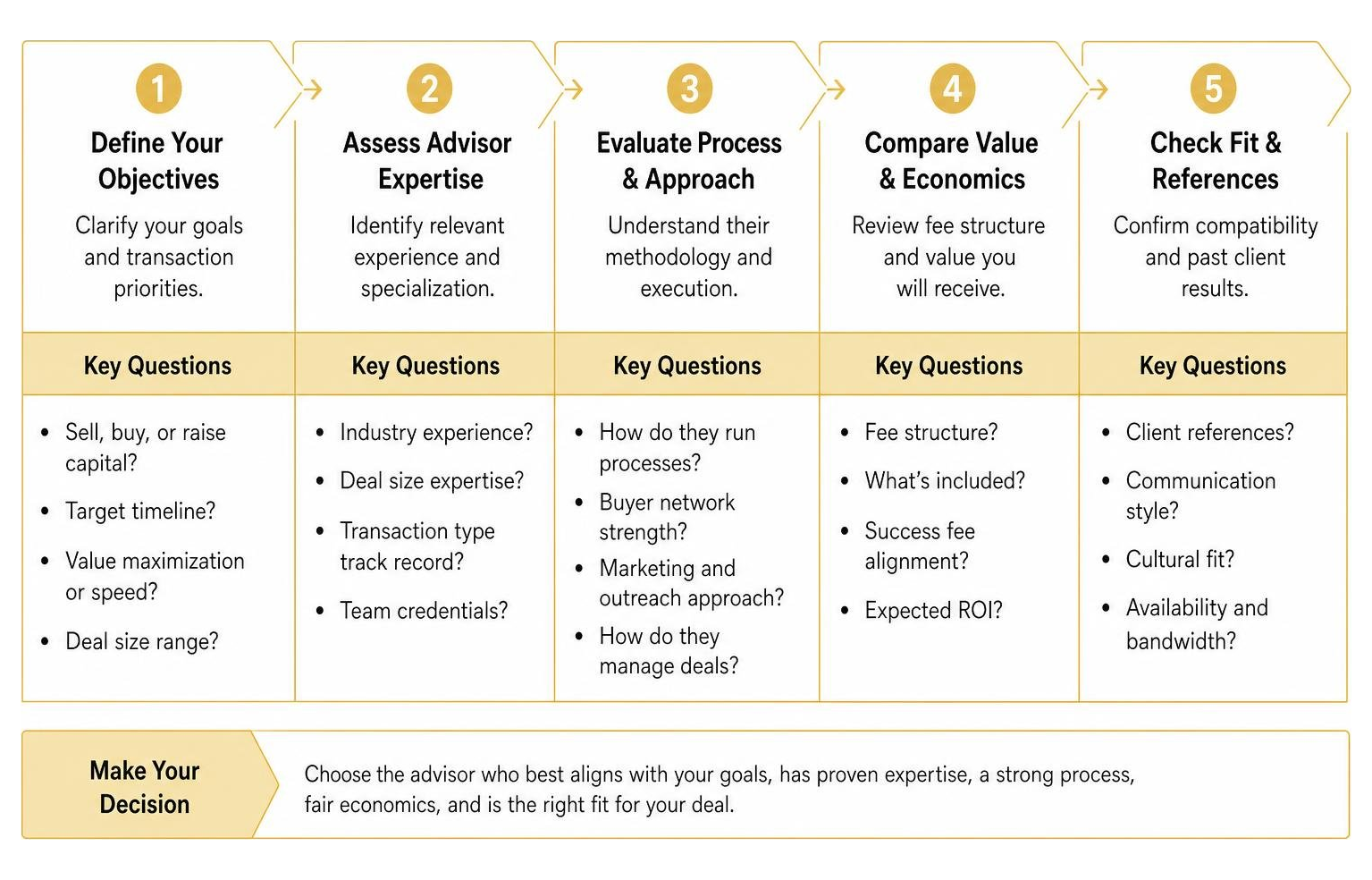
To select the best partner, you need to understand the distinct categories of transaction advisors available in 2026. Different deal sizes and business models require tailored expertise.
| Category | Primary Focus | Best Fit For | Geographic Reach |
|---|---|---|---|
| 1. Full-Service M&A Advisory | Mid-market businesses ($2M–$50M+) | Growing companies seeking maximum exit value | Regional & National |
| 2. Main Street Business Brokers | Small storefronts & local services | Businesses under $1M annual revenue | Localized |
| 3. SaaS & Tech Specialists | Recurring revenue & digital assets | Software, e-commerce, and tech firms | Global online reach |
| 4. Manufacturing Specialists | Asset-heavy & industrial operations | Distribution, fabrication, and machining | National & International |
| 5. Franchise Brokerage Networks | Franchise units & multi-unit locations | Franchisees buying/selling existing units | Multi-state / National |
| 6. Regional Boutique Intermediaries | Deep local market presence | Established regional family businesses | Specific metro/state regions |
| 7. Lower Middle-Market Investment Banks | Complex financial & corporate exits | High-growth firms ($10M+ EBITDA) | Global institutional networks |
| 8. Online Marketplace Intermediaries | Micro-SaaS & small digital businesses | Sole proprietors & side projects | Global digital listings |
| 9. Sub-Broker Partnerships | Cross-border and syndicated sales | Complex corporate spinoffs | Multi-jurisdictional |
| 10. Specialized Medical & Healthcare Brokers | Dental, medical, and practice management | Healthcare providers & clinics | State & Regional |
When reviewing options, comparing the 5 best business brokers compared gives you a clear sense of how advisory firms differentiate themselves by transaction size and industry reach.
Local Business Broker vs National Network
A common dilemma for business owners is choosing between a local intermediary and a national firm.
Local brokers offer deep root systems within the community, intimate knowledge of regional economic trends, and convenient face-to-face service. They excel at “Main Street” businesses like restaurants, service franchises, and local retail. For insights on navigating this, read our guide on finding the best local business brokers near you without losing your mind.
Conversely, national brokerage networks bring vast buyer databases, robust digital marketing infrastructure, and nationwide buyer reach. If your business appeals to out-of-state private equity firms or strategic corporate buyers, a national footprint is essential.
Specialized Industry Advisory Services
Generalist brokers know the transaction process, but industry specialists understand your operational metrics. Sector-specific advisors know precisely which valuation multiples apply to your revenue model:
- Technology & SaaS: Evaluating tech companies requires deep knowledge of net revenue retention (NRR), customer acquisition cost (CAC), and churn. Specialized SaaS business brokers understand how to position software businesses for premium multiples.
- Manufacturing & Industrial: Valuing machinery, work-in-progress inventory, and supply chain health demands dedicated industrial expertise. Partnering with experienced manufacturing business brokers ensures physical assets and operational capacity are fully valued.
Key Steps in the Brokerage Process from Listing to Closing
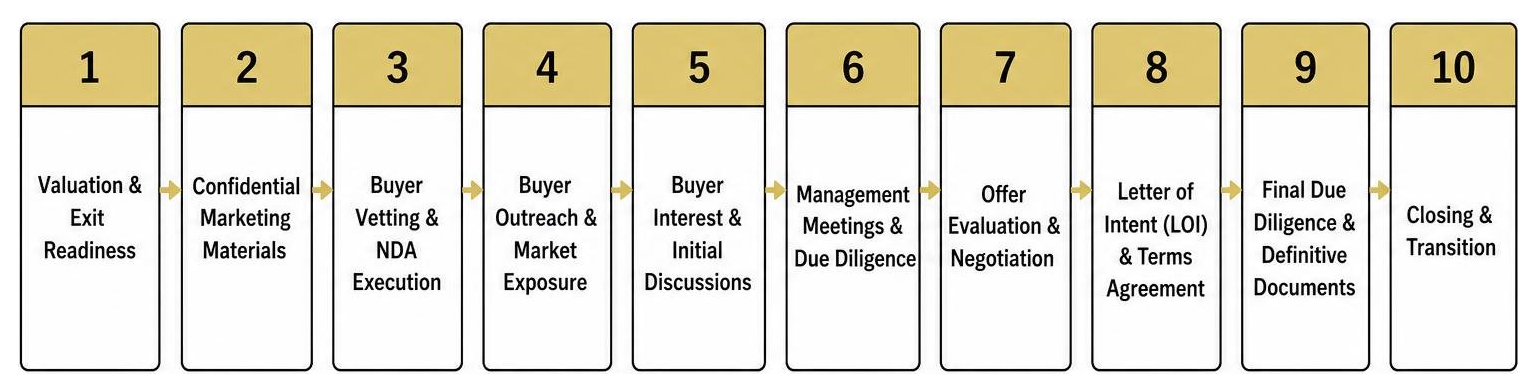
A successful transaction requires a structured, multi-phase approach. A business broker guides you through each critical milestone:
- Valuation & Exit Readiness: The broker reviews historical financial statements (typically 3–5 years), adjusts for discretionary expenses (Seller’s Discretionary Earnings or SDE), and establishes a defensible asking price.
- Confidential Marketing Materials: The advisor creates a blind summary profile (teaser) and a comprehensive Confidential Information Memorandum (CIM) outlining operations, growth opportunities, and financial metrics.
- Buyer Vetting & NDA Execution: Prospective buyers must sign a non-disclosure agreement and submit proof of funds or acquisition experience before receiving detailed disclosures.
- Offer Negotiation & Letter of Intent (LOI): The broker manages prospective offers, evaluates deal terms, and negotiates a clear LOI detailing price, working capital targets, and transition terms.
- Due Diligence Support: During this high-risk stage, the broker acts as a central coordinator, providing detailed financial and legal records via a secure digital room.
- Definitive Purchase Agreement & Legal Closing: Working with transaction attorneys, the broker helps finalize legal documents, secure lender approval, and ensure a seamless transfer of ownership.
For a deeper dive into mastering these phases, explore our guide on how a business broker elevates your exit strategy.
Valuation, Fees, and Qualifications of a Trusted Business Broker
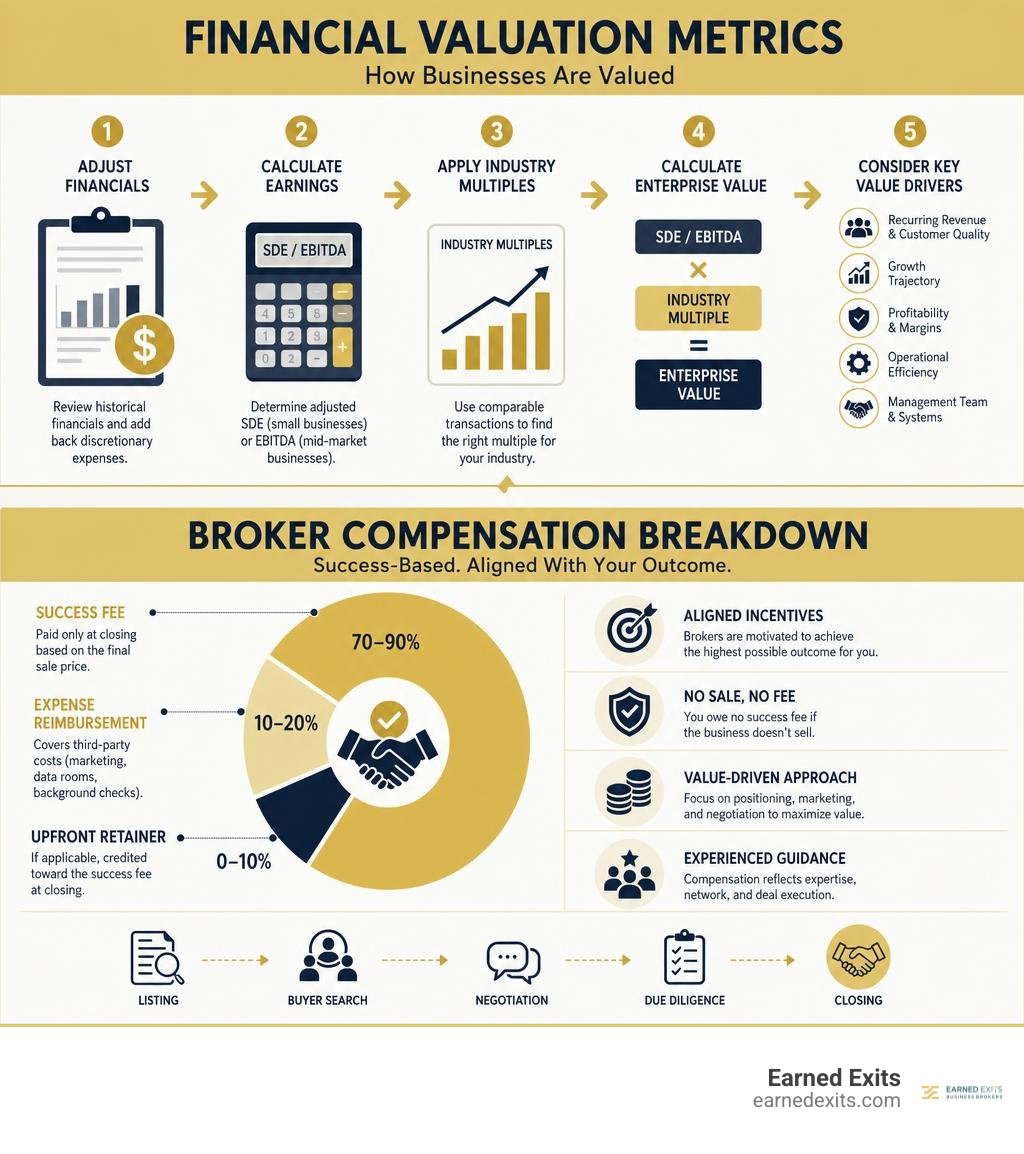
Understanding valuation methodology, standard fee models, and credentialing helps ensure you hire a qualified professional.
Determining Fair Market Value
To calculate value, intermediaries adjust income statements to determine adjusted SDE (for smaller entities) or EBITDA (for mid-market firms). They apply industry-specific multiples derived from comparable market transactions.
Fee Structures
Most transaction advisors operate on a success-fee model aligned with your financial goals:
- Success Fees: Typically range from 8% to 12% for smaller deals. Mid-market transactions frequently utilize the Lehman Scale or modified Lehman formulas (e.g., 10% of the first million, 8% of the second, 6% of the third, and so on).
- Retainer Fees: Professional M&A firms often charge an upfront commitment fee or monthly retainer to cover marketing costs and valuation prep, which is usually credited against the final success fee.
Essential Credentials & Standards
When evaluating candidates, verify their professional credentials and credentials:
- CBI (Certified Business Intermediary): Designation awarded by the International Business Brokers Association (IBBA).
- M&AMI (Mergers & Acquisitions Master Intermediary): Advanced accreditation from M&A Source for mid-market specialists.
- Real Estate License: Many jurisdictions require brokers to maintain an active real estate license to handle lease transfers or real property sales (for example, verifying local licensing bodies or real estate firms like Samoa Realty Ltd when real estate assets are involved in a deal).
Avoid common mistakes like hiring a broker who promises an unrealistically high valuation just to sign a contract, or choosing an advisor without verifiable experience in your specific industry. For a full breakdown of credentialing and advisor selection, consult The Ultimate Guide to Hiring a Professional Business Broker.
How to Choose a Business Broker for Your Exit
Finding the right advisory partner requires rigorous vetting. Ask direct questions before signing an exclusive agreement:
- What is your recent track record of closed deals in my industry?
- How do you screen buyers for financial capability and operational fit?
- What is your communication cadence throughout marketing and due diligence?
- What are the terms of your engagement agreement and exit clauses?
Arm yourself with key questions by reviewing our detailed checklist on 10 questions to ask a business broker when choosing the right partner for a meaningful exit.
Frequently Asked Questions
What is the typical commission fee for transaction intermediaries?
Commissions vary by transaction size. Smaller Main Street transactions under $1 million usually carry a 10% to 12% success fee. Mid-market deals ($2M to $20M+) usually feature scaled fee structures, such as a modified Lehman formula, ranging from 4% to 8% overall.
How do intermediaries protect sensitive company data during a sale?
Intermediaries use a multi-tiered privacy strategy: blind teasers that mask company identity, mandatory legally binding NDAs before sharing details, thorough buyer financial vetting, and secure digital data rooms with strict access controls.
What is the difference between a main street broker and an M&A advisor?
Main Street brokers typically handle small, lower-complexity businesses (generally under $1M in deal value or SDE) using standardized contracts. M&A advisors manage mid-market transactions ($2M to $50M+), involving customized deal structures, complex due diligence, private equity buyers, and detailed tax strategies.
Conclusion
Navigating a business sale requires strategy, market knowledge, and absolute discretion. At Earned Exits, we provide a seamless, organized exit process supported by excellent communication, robust CFO-level due diligence assistance, and modern client tools built for efficiency.
Whether you are preparing to exit in six months or three years, partnering with an experienced advisory team ensures you secure top market value while protecting your legacy. Ready to explore your business valuation and exit options? Discover our comprehensive sell my business services today.
