


Stop Hiding Your Business and Start Marketing It for Sale
Why Most Business Sales Fail Before They Even Start
Knowing how to market a business for sale is the difference between a successful exit and a listing that quietly dies. Here’s a quick overview of the key steps:
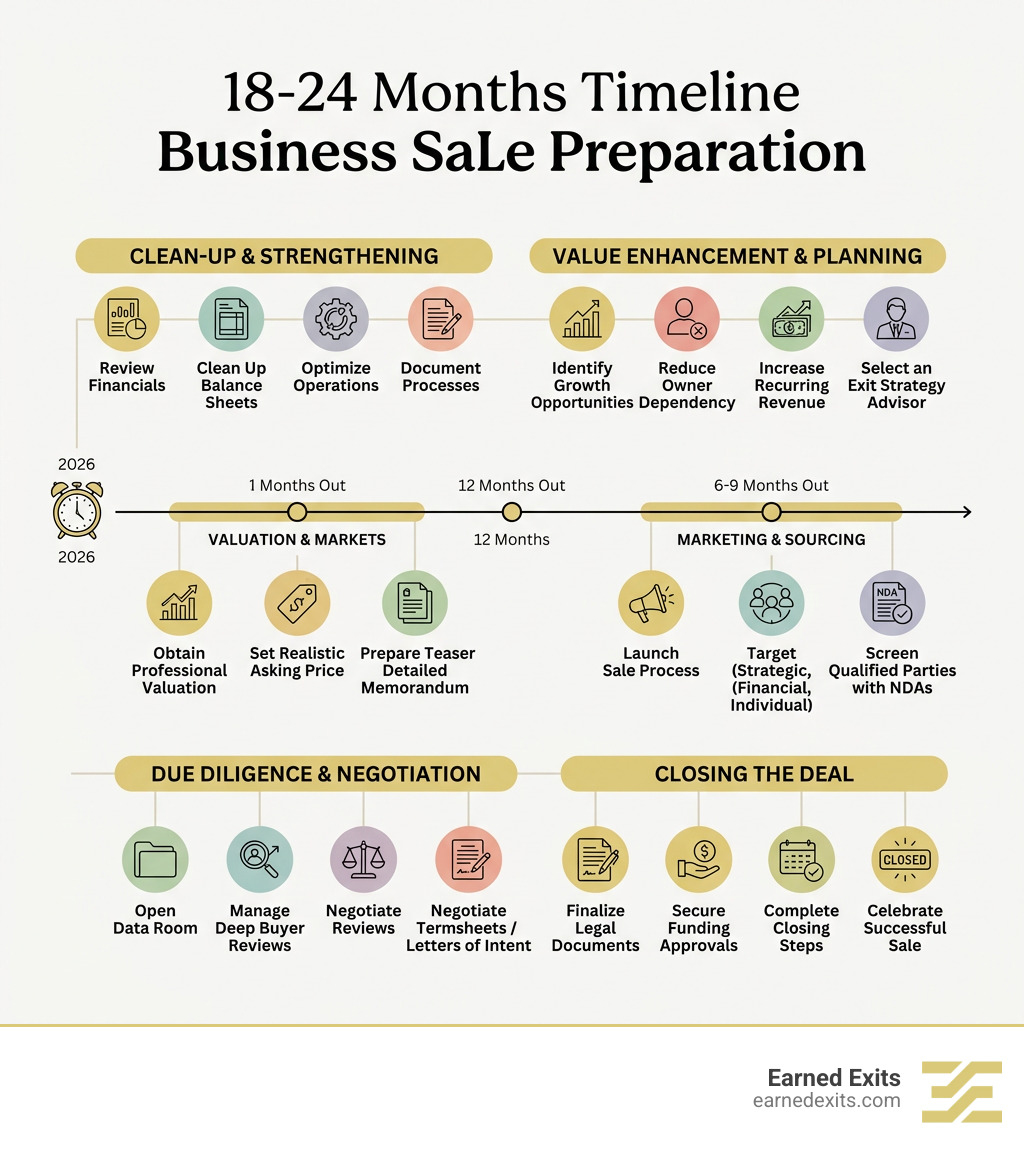
- Prepare early – Start cleaning up financials and operations 18-24 months before listing
- Get a professional valuation – Price based on market data and industry multiples, not gut feeling
- Create a teaser or one-page summary – Share key metrics without revealing sensitive details
- Choose your marketing channels – Online marketplaces, LinkedIn, brokers, and warm outreach
- Target the right buyers – Strategic, financial, or individual buyers each need a different approach
- Protect confidentiality – Use NDAs before sharing any business details
- Screen buyers early – Qualify financial readiness and intent before going deep
- Negotiate and close – Work with advisors to finalize terms and complete due diligence
Only 30 to 40% of businesses put up for sale actually sell. Let that sink in.
Most don’t fail because the business is bad. They fail because the marketing is bad — or nonexistent.
Selling a business isn’t like selling a product. You can’t just post a listing and wait. The average sale takes 10 to 12 months from start to close. And the owners who get the best outcomes? They started preparing 18 to 24 months before they ever went to market.
If you’re a first-time seller, this process can feel overwhelming. The good news: with the right strategy, you can attract serious buyers, protect your business along the way, and close at a price that reflects what you’ve built.
This guide walks you through exactly how to do that — step by step.
Preparing Your Business for Maximum Marketability
Before we even talk about ads or listings, we have to talk about the “product.” In this case, the product is your life’s work. If you were selling a house, you wouldn’t invite buyers over while the sink was leaking and the grass was three feet high. You’d paint the walls, fix the leaks, and boost that “curb appeal.”
The same logic applies when you want to market a business for sale. Marketing begins with preparation.
Getting Your Books in Order
The first thing any serious buyer will ask for is your financial history. They aren’t just looking for “profit”; they are looking for transparency and reliability. We recommend taking an internal perspective of your books and paperwork to ensure everything is accurate and easy to review.
Prospective buyers generally want to see at least three years of financial information. To make your business truly “marketable,” your financials should ideally be GAAP-compliant. We also focus on “Normalized EBITDA.” This means taking your Earnings Before Interest, Taxes, Depreciation, and Amortization and adding back one-time expenses or owner-specific perks (like that company car or a one-time legal fee). These “add-backs” show the buyer the true earning potential of the business under new ownership.
The Power of Storytelling
Numbers tell part of the story, but The Power of Storytelling in Business Sales is what creates lasting value. Why did you start this? What is the “secret sauce” that keeps customers coming back? A business with a compelling narrative—one that highlights a loyal customer base and a strong brand—often commands a higher price than one that just presents a spreadsheet.
Operational Streamlining and Reducing Owner Reliance
A business that can’t run without you isn’t a business; it’s a job. And buyers don’t want to buy a 60-hour-a-week job. To make your company more attractive, you must document your Standard Operating Procedures (SOPs).
Streamlining operations by automating tasks and training your staff to handle daily decisions makes the transition much smoother for a new owner. If you can show that the business runs like a well-oiled machine while you’re on vacation, you’ve just increased your marketability tenfold.
How to Market a Business for Sale: Defining Your Strategy
Marketing a business follows the classic “4 Ps”: Product, Price, Place, and Promotion. But in M&A (Mergers and Acquisitions), the “Place” and “Promotion” look a little different.
Understanding Your Target Buyer
Not all buyers are created equal. To market effectively, we need to know who we are talking to:
- Individual Buyers: Often looking to replace a corporate job. they want a stable lifestyle business.
- Financial Buyers (Private Equity): They look at the numbers. They want a high ROI and a business that can scale or be “tucked into” their existing portfolio.
- Strategic Buyers: These are often your competitors or companies in related industries. They buy you because your business adds something they lack—like a specific technology, a geographic footprint, or a unique customer list.
Pricing Realistically for the Market
One of the biggest marketing mistakes is overpricing. If the price is too high, serious buyers won’t even click on the listing. You need to understand the multiples common in your industry. For example, a SaaS company with recurring revenue and customer concentration might sell for a much higher multiple than a local landscaping company.
| Industry Type | Typical EBITDA Multiple |
|---|---|
| SaaS / Technology | 5.0x – 8.0x |
| Manufacturing | 3.5x – 5.0x |
| Service Businesses | 2.0x – 3.5x |
| Retail / Hospitality | 1.5x – 3.0x |
The Seller Financing Advantage
Want to increase your sale price by roughly 15%? Offer seller financing. By “carrying a note” (allowing the buyer to pay part of the price over time with interest), you signal confidence in the business’s future. It also expands your pool of potential buyers to those who might have trouble securing 100% bank financing.
Crafting a Teaser for how to market a business for sale
When you’re ready to “go live,” you don’t just put your business name on a billboard. You use a “Teaser”—a one-page summary that provides enough information to pique interest without revealing the name of the company.
Key elements of a great teaser include:
- Key Metrics: Revenue, EBITDA, and growth rates.
- Value Proposition: What makes you special? (e.g., “Proprietary software,” “30-year reputation”).
- Revenue Stickiness: Do you have long-term contracts or high revenue stickiness? This builds massive trust.
- The “Why”: A brief, honest reason for the sale (retirement, new ventures).
Check out our Listings page to see how we structure these descriptions to attract high-quality leads while maintaining total privacy.
Digital Platforms for how to market a business for sale
Once your teaser is ready, it’s time to find the “Place.”
- LinkedIn: This is a goldmine for reaching professionals with capital. LinkedIn reaches professionals with capital and allows you to join industry-specific groups where your target buyer might be lurking.
- Online Marketplaces: Sites like BizBuySell or BizQuest are the “Zillows” of the business world. They are great for reaching individual buyers.
- Warm Outreach: This is often the fastest route. Email outreach to warm contacts—like your accountant, lawyer, or even non-competing peers—can yield response rates between 10% and 34%.
If you’re feeling overwhelmed by the technical side, our Business Brokerage Services can handle the heavy lifting of platform management and lead tracking for you.
Multi-Channel Outreach and Buyer Targeting
Marketing isn’t a “set it and forget it” task. It requires consistent effort. If you are selling the business yourself, you should budget four to six hours weekly for direct outreach, especially in the first few months.
Systematic Tracking
Don’t just send emails into the void. Use a spreadsheet or a CRM to track every outreach attempt. Note who you contacted, when, and what their response was. Following up is where the deal is usually made.
Working with Professionals
While some owners choose to go it alone, there are significant risks to FSBO (For Sale By Owner). You might save on commission, but you often lose on the final sale price because you don’t have the same reach as a professional. Knowing the 10 Questions to Ask a Business Broker can help you decide if you need a partner to manage this complex process.
Protecting Your Legacy Through Confidentiality and Screening
This is the “hiding” part of our title. While you are marketing the business, you must protect its current operations. If your employees, customers, or competitors find out you are selling too early, it can cause panic, loss of staff, or a drop in sales.
The Art of Confidentiality
The Art of Confidentiality is a balancing act. You need to provide enough info to get a “yes” to a meeting, but not enough to reveal your identity until a non-disclosure agreement (NDA) is signed. Sharing full financial statements or customer lists before an NDA is signed is reckless and can tank your deal momentum.
Screening and Qualifying Buyers
Not everyone who asks for information is a buyer. Some are “window shoppers,” and some are competitors fishing for data. We use a phased disclosure approach:
- The Teaser: No identifying info.
- The NDA: Signed before any real data is shared.
- Proof of Funds: We ask for financial vetting to ensure the buyer actually has the money to close.
- The Meeting: Once we know they are serious, we sit down to talk.
By screening early, you save yourself dozens of hours of wasted time. This is a critical part of Sealing the Deal and ensuring you only spend time with people who can actually cross the finish line.
Frequently Asked Questions about Marketing a Business
How long does the marketing process typically take?
On average, it takes about 10 to 12 months to complete the sale of a business. This includes the time spent preparing the marketing materials, finding a buyer, and going through the rigorous due diligence process. However, if your business is in a high-demand industry like SaaS or specialized healthcare, it could move faster.
Should I use a broker or sell the business myself?
Selling Your Business on Your Own: A Risk You Don’t Want to Take is a common debate. A broker usually charges an 8-12% commission, but they also tend to sell businesses for higher prices and with better terms. More importantly, they allow you to keep running your business—which is vital for maintaining its value during the sale process.
How do I price my business realistically for the market?
Pricing should be based on market data, not emotion. Look at recent sales of similar businesses in your industry and geography. A professional valuation is the best way to determine your “asking price.” The market will ultimately tell you what it’s worth; if you haven’t received any inquiries after six weeks of active marketing, it’s usually a signal that your price or your terms need an adjustment.
Conclusion
Marketing a business for sale isn’t about shouting from the rooftops; it’s about whispering in the right ears. It requires a blend of meticulous financial preparation, strategic storytelling, and iron-clad confidentiality.
At Earned Exits, we specialize in making this process seamless. From providing a professional valuation to managing the complex due diligence phase, we give you the tools and communication you need to transition to your next chapter with confidence. Whether you are in Alabama, California, Florida, or anywhere across our service areas, we are here to ensure your exit is as rewarding as the years you spent building the company.
Ready to stop hiding and start your journey? Start Your Journey to a Successful Exit with us today.
