


Mastering the Art of Selling Websites on Flippa
What You Need to Know About Selling Websites on Flippa
Selling websites on Flippa is one of the fastest ways to turn your digital business into cash — with over 400,000 active buyers every week and deals closing in as little as 15 days.
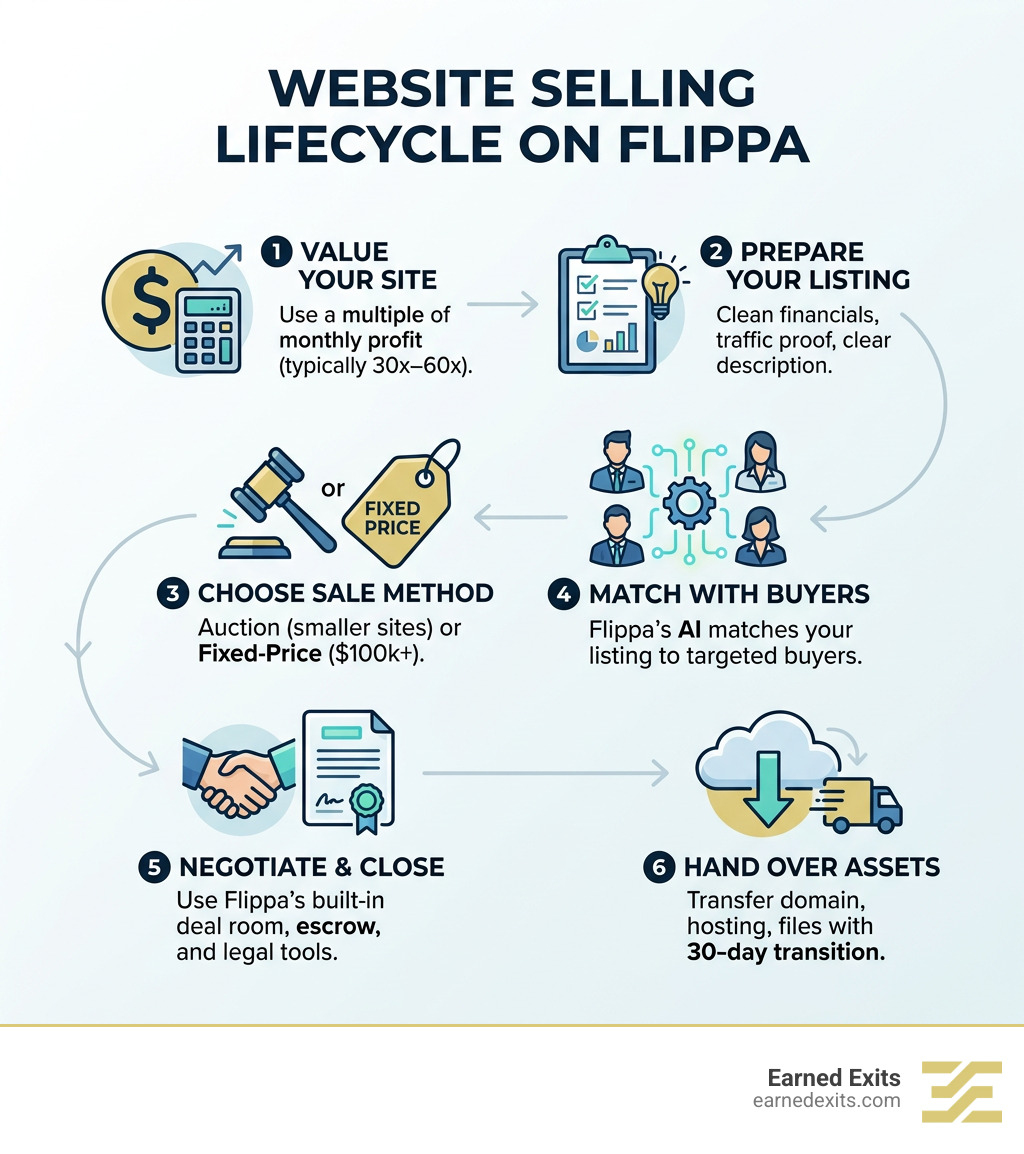
Here’s a quick overview of how the process works:
- Value your site — Use a multiple of monthly profit (typically 30x–60x depending on your business type)
- Prepare your listing — Clean financials, traffic proof, and a clear description
- Choose your sale method — Auction (great for smaller sites) or fixed-price (better for $100k+)
- Match with buyers — Flippa’s AI matches your listing to targeted buyers automatically
- Negotiate and close — Use Flippa’s built-in deal room, escrow, and legal tools
- Hand over the assets — Transfer domain, hosting, and files with a 30-day transition period
If you’re a first-time seller, the process can feel overwhelming. There are valuations to figure out, documents to gather, buyers to vet, and a migration to manage — all while running your business day-to-day.
The good news? With the right preparation, selling doesn’t have to be stressful. Flippa’s marketplace connects sellers to more than 450,000 entrepreneurs and investors globally, with over 10 million AI-powered buyer matches happening every month.
This guide walks you through every step — from preparing your site for sale to handing over the keys — so you can exit with confidence and get the best possible price.
Preparing Your Asset for Selling Websites on Flippa
Preparation is the difference between a listing that sits for months and one that sparks a bidding war. When we talk about selling websites on Flippa, we aren’t just putting a “For Sale” sign on a URL; we are presenting a turnkey business opportunity to an audience of over 450,000 entrepreneurs.
The first step is getting your house in order. Buyers on Flippa are data-driven. They want to see clean, verifiable financials that tell a clear story of growth. If your books are a mess of personal expenses and undocumented income, you’ll likely scare off the most serious investors. We recommend using professional Business Valuation Services to ensure your numbers reflect the true health of your asset.

One of the most critical steps in the preparation phase is establishing traffic proof. Flippa statistics show that listings with Google Analytics (GA4) connected receive 2.8x more views and 2.4x more watchers. This connection provides an “unfiltered” look at your audience, which builds immediate trust. You can Watch video Benchmarking and Comparison Insights to see how this data allows you to compare your performance directly against the competition within your listing.
Beyond the numbers, you need to document your Standard Operating Procedures (SOPs). If the site only runs because you spend 40 hours a week on it, it’s a job, not an investment. By documenting how you manage content, social media, and technical updates, you show the buyer that the business can survive—and thrive—without you.
Essential Documents and Proofs for Buyers
When you list, be ready to open the “kimono.” Serious buyers will expect a full due diligence package. At a minimum, you should have:
- Profit and Loss (P&L) Statements: Ideally covering the last 12 to 24 months.
- Revenue Evidence: Screenshots or exports from Stripe, PayPal, Amazon Associates, or AdSense.
- Ownership Verification: Proof that you own the domain and all associated intellectual property.
- Supplier Contracts: If you run an e-commerce or dropshipping site, buyers need to know the terms with your vendors.
If you get stuck on what exactly to provide, you can always Go to Flippa Help Center to search their knowledge base for specific requirements.
Maximizing Value Before the Listing
Can you sell a website even if it isn’t profitable? Absolutely. Flippa is famous for its “turnaround” market. Some buyers look specifically for sites with great traffic but poor monetization, or a solid brand that has been neglected. However, to get the maximum price, you should spend 3-6 months “polishing the chrome.”
This means fixing technical “red flags” like broken links or slow mobile loading speeds. It also means diversifying your revenue. A site that relies 100% on one affiliate program is riskier than one with multiple income streams.
Valuation and Pricing Strategies for Maximum Exit Value
How much is your “baby” actually worth? In selling websites on Flippa, value is typically determined by a multiple of your monthly net profit.
| Business Type | Typical Monthly Multiple | Key Value Drivers |
|---|---|---|
| Content / Blogs | 30x – 45x | Traffic diversity, SEO strength |
| E-commerce | 30x – 50x | Brand loyalty, supply chain stability |
| SaaS | 35x – 60x | Low churn, recurring revenue |
Multiples vary based on risk. A site with a five-year history and steady growth will command a much higher multiple than a “viral” site that is only three months old. You can read more about how 30× to 45× monthly profit serves as the industry standard for content sites.
To get an accurate starting point, we suggest using a Free Valuation tool. Flippa’s own valuation engine is backed by over a decade of sales data, ensuring your price aligns with current market demand.
Pricing for a Fast Sale vs. Maximum Price
If you need cash quickly, pricing your site at a 2-2.5x annual profit (roughly a 24x–30x monthly multiple) will often trigger a fast sale. Median closing times for deals under $50k are just 15 days!
However, if you want the maximum exit, you might set a higher “Buy It Now” price and use an auction to let the market determine the final value. Be careful with reserve prices; setting a reserve that is too high can deter bidders and make your listing look stagnant.
The Role of Brokers in Selling Websites on Flippa
For larger or more complex deals (typically those over $100k), you might consider professional help. These Business Brokerage Services can handle the heavy lifting of negotiation, vetting buyers, and ensuring the legal paperwork is airtight. While they do charge a success fee, they often pay for themselves by securing a higher final sale price.
Creating a High-Converting Listing and Choosing Your Sales Method
Your listing is your sales pitch. It needs to be professional, transparent, and exciting. Start with your tagline—you have 120 characters to hook a buyer. Avoid using ALL CAPS or excessive exclamation marks. Instead, focus on your Unique Selling Proposition (USP). For inspiration, you can study top-performing listings to see which headlines actually convert and attract the most attention.
In your description, be honest about why you are selling. “Moving on to other projects” is the standard answer, but adding a personal touch builds rapport. Highlight growth opportunities—tell the buyer exactly what you would do if you were keeping the site for another year.
Auction vs. Fixed-Price: Which is Right for You?
Flippa offers two main ways to sell:
- Auctions: These typically run for 30 days. They are fantastic for creating urgency and “FOMO” (fear of missing out) among buyers. If you have a highly active site with lots of interest, an auction can drive the price well above your expectations.
- Fixed-Price (Classifieds): This is often preferred for larger assets (over $100k) where the negotiation process is more nuanced. It allows for a more stable, traditional sales environment.
Maintaining Privacy with Confidential Listings
Not every seller wants their competitors or employees to know the site is for sale. Flippa allows for “Private” or “Discreet” listings. This masks your URL and sensitive details. Buyers must sign a Non-Disclosure Agreement (NDA) before they can see the specifics of your business. You can Learn more Integrated Legals & Esign about how Flippa uses tools like Dropbox Sign to make this process seamless and legally binding.
Navigating the Flippa Ecosystem: AI Matching and Security
One of the most powerful features of selling websites on Flippa is their AI Buyer Matching. With over 10 million matches made every month, Flippa’s algorithm proactively puts your listing in front of investors who have previously bought similar assets. This “active” marketing is why 67% of deals on the platform are cross-border, spanning 193 different countries.
Security is also a top priority. Flippa integrates with escrow services to ensure that funds are held safely until the buyer confirms they have received the assets. This protects both parties from fraud. If you’re looking for specialized help in the e-commerce space, Ecommerce Business Brokers can provide additional layers of security and niche expertise.
Leveraging AI Matching for Targeted Exposure
The AI doesn’t just look at what buyers say they want; it looks at what they actually do. By analyzing search patterns and past purchases, the system identifies “qualified” buyers with real acquisition budgets—some as high as $50M.
Common Mistakes to Avoid When Selling Websites on Flippa
We’ve seen it all, and most “failed” sales come down to a few common errors:
- Lack of Transparency: If a buyer finds a problem you didn’t disclose during due diligence, the deal will likely collapse.
- Poor Communication: Buyers expect quick answers. If you take three days to reply to a comment, they’ll move on to the next listing.
- High Reserves: Don’t get greedy. If the market says your site is worth $20k, but your reserve is $50k, you’re wasting your listing fee.
- Going It Alone on Complex Deals: Selling Your Business on Your Own: A Risk You Don’t Want to Take if the transaction involves complex inventory, multiple employees, or custom-coded SaaS architecture.
Closing the Deal: Due Diligence and Migration
Once you accept an offer, you enter the “Deal Room.” This is a secure area where you and the buyer can exchange final documents and coordinate the transfer. Median closing times vary by deal size:
- Sub-$50k: 15 days
- $50k–$250k: 49 days
- $250k+: 73 days
For SaaS businesses, the process can be slightly longer due to code audits and technical handovers. Working with SaaS Business Brokers can help streamline this technical phase.
The Process for Migrating and Handing Over Assets
The “migration” is the final hurdle. This involves moving the domain name to the buyer’s registrar and transferring the website files and database to their hosting provider.
We recommend providing a 30-day transition period where you are available via email or Zoom to answer questions. This over-delivery on service often leads to “repeat buyers” who will look for your future listings. If you have an email list, you might even help the buyer build a list with Aweber for cheap to ensure they see immediate value from the acquisition.
Protecting Your Sale with Integrated Safeguards
To prevent post-sale disputes, ensure you use a formal Asset Purchase Agreement (APA). Flippa provides legal templates that cover the essentials: what is being sold, the price, the non-compete clause, and the training period.
Frequently Asked Questions about Selling Websites on Flippa
Can you sell a website on Flippa even if it’s not profitable?
Yes, you certainly can. While profitable sites command higher multiples, many buyers look for “strategic” acquisitions. They might want your domain’s age, your existing traffic, or a specific feature of your software. As long as you are transparent about the costs and the “why” behind the lack of profit, there is a market for your asset.
How long does it typically take to sell a website on Flippa?
It depends on the price. Smaller “starter” sites can sell in as little as 48 hours. For established businesses, the median time to find a buyer is about 7 to 15 days, with the full closing process (including due diligence and migration) taking between 30 and 90 days on average.
What types of websites sell best on Flippa?
Currently, SaaS businesses, content-heavy blogs (especially in evergreen niches like finance or health), and established E-commerce stores (Amazon FBA and Shopify) are in high demand. Buyers love recurring revenue and “defensible” brands that aren’t easily copied.
Conclusion
Selling websites on Flippa is a journey that requires equal parts data, marketing, and patience. By preparing clean financials, leveraging AI matching, and maintaining total transparency, you can join the ranks of over 100,000 founders who have successfully exited through the platform.
At Earned Exits, we specialize in making this process as seamless as possible. From our thorough due diligence support to our expert communication tools, we help you navigate the complexities of the digital marketplace so you can focus on your next big venture.
Ready to see what your business is worth? Sell My Business with the help of experts who understand the art of the exit.
