


Dental Practice Sell Process: Steps to Maximize Value
Key Phases of the Dental Practice Sell Process
Navigating the dental practice sell process requires managing multiple moving parts simultaneously. It is not just about putting a “for sale” sign on the front door; it involves strategic financial alignment, operational cleanup, and legal precision. To achieve a smooth deal, sellers must move through structured exit phases, beginning with timing and ending with an effective seller-to-buyer handoff.
Understanding each phase ensures you keep momentum while protecting your confidential patient data. To review a general overview of business sales, explore our guide on how to sell a business steps to a smooth exit and our comprehensive beginners guide to selling a business.
Step 1: Building Your Professional Advisory Team
You spend your days focusing on clinical excellence, so trying to double as your own investment banker, contract attorney, and tax expert can lead to costly oversights. Assembling a specialized exit team early keeps you focused on producing dentistry while experts handle the transaction mechanics.
Your core advisory team should consist of:
- Dental Practice Broker / M&A Advisor: Manages confidential marketing, pre-screens prospective buyers, coordinates communication, and keeps negotiations moving forward. Delegating deal negotiations to an experienced broker makes it easier for you to remain objective and keep your daily focus on patient care.
- Specialized Dental Attorney: Drafts legal documents tailored specifically to dental health laws, lease assignments, restrictive covenants, and patient retreatment liabilities. General business attorneys often miss critical healthcare nuances.
- Dental Practice Valuator: Delivers an unbiased, data-backed appraisal of your practice’s tangible assets and goodwill.
- Financial Advisor / CPA: Focuses on tax minimization strategies, asset allocation, and post-sale income planning to ensure your proceeds support your long-term wealth goals.
Step 2: Preparing Financials and Due Diligence Documents
Buyers and lenders scrutinize dental practice financial records closely. Preparing a comprehensive due diligence binder 12 to 18 months before hitting the market instills buyer confidence and speeds up bank financing approvals.
You will need to gather and organize:
- Financial Statements & Tax Returns: Three to five years of profit and loss statements, balance sheets, and corporate tax returns.
- Production & Revenue Reports: Detailed breakdowns of gross collections, patient insurance vs. fee-for-service ratios, hygiene production, and procedure code distributions.
- Equipment & Facility Inventory: An itemized inventory listing all dental units, imaging systems, IT hardware, and general office equipment along with serial numbers, purchase dates, maintenance logs, and active warranties.
- Compliance & Licensing Records: Radiation equipment registrations, environmental permits, facility leases, and local regulatory filings.
- Patient Metrics: Active chart counts (patients seen within the last 18–24 months), new patient acquisition numbers, case acceptance rates, and account collection reports.
To better understand how buyers assess these materials, read our guide on mastering the art of the due diligence report.
Step 3: Determining Practice Value and Value Drivers
Dental practices are valued on a combination of tangible assets (dental chairs, imaging devices, inventory) and intangible goodwill (active patient lists, practice reputation, location). While general businesses often sell strictly as a multiple of EBITDA (Earnings Before Interest, Taxes, Depreciation, and Amortization), dental sales also examine collections, net operating income, and clinical hygiene efficiency.
Key value drivers that elevate your practice appraisal include:
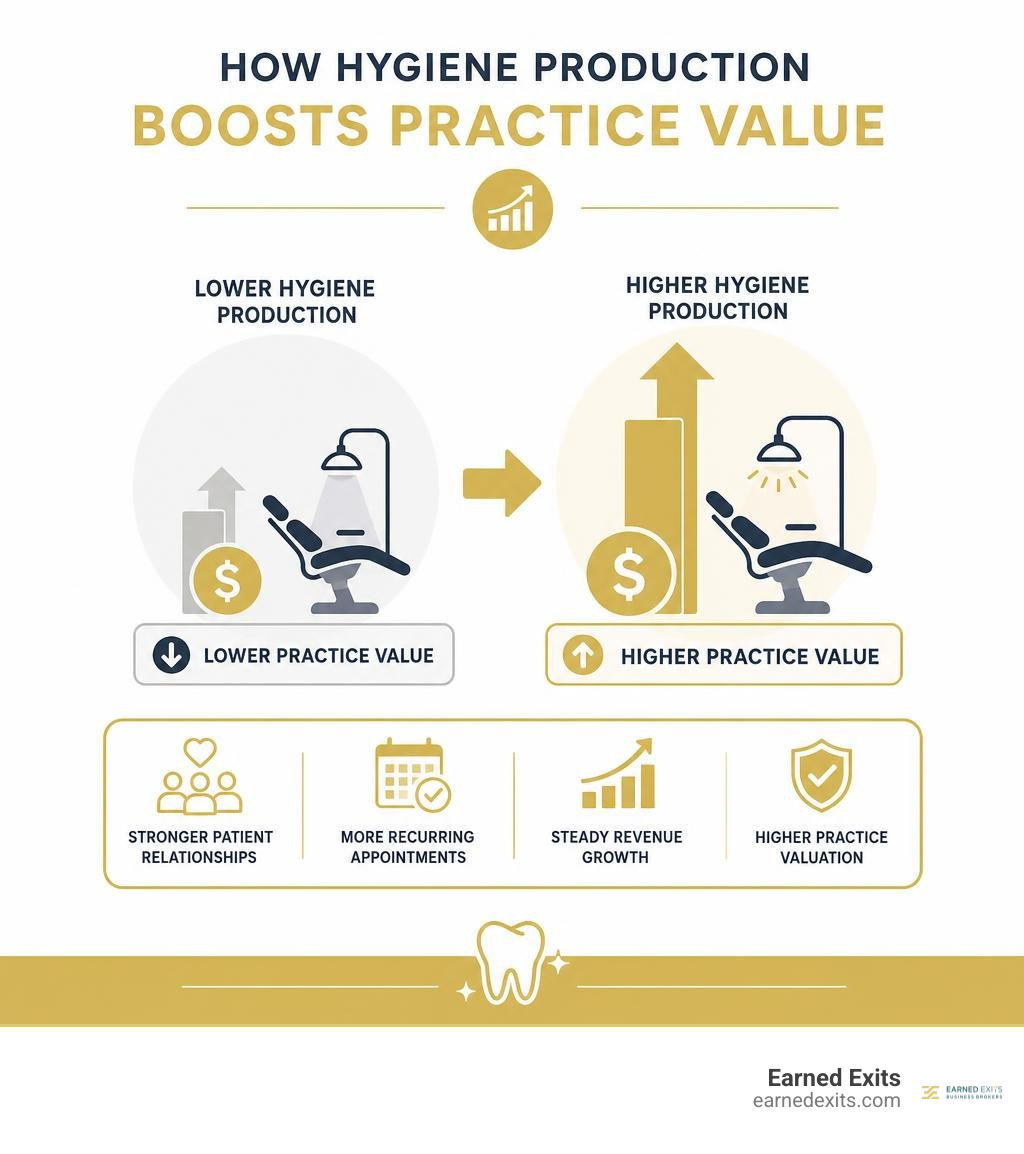
- Hygiene Program Strength: A thriving hygiene department where hygiene accounts for 30% or more of gross collections generates predictable, recurring income that buyers love.
- Automated Recall Systems: Consistent patient recall workflows ensure high retention and full appointment books without requiring heavy advertising budgets.
- Updated Fee Schedules: Regularly updated, competitive fee schedules directly boost gross collections without increasing clinical hours.
- Modernized Technology: Operatories equipped with modern digital sensors, intraoral scanners, and modern practice management software reduce post-closing capital expenses for incoming buyers.
To dive deeper into business appraisals, read The Definitive Guide to Business Valuation or learn how to secure a formal professional business valuation report.
Transition Options and Structuring the Sale
Every dental practice seller brings different personal, clinical, and financial goals to the table. Choosing the right structural pathway determines how quickly you walk away, how much equity you retain, and how your daily workflow changes post-closing.
Reviewing the ultimate list of business exit strategies for every owner will help you align your personal goals with the right deal model.
| Transition Model | Best For | Pros | Cons |
|---|---|---|---|
| Outright Sale | Practice owners ready to retire or relocate within 3 to 12 months. | Complete liquidity, fast exit, clean break from management liabilities. | Immediate loss of clinical income; requires swift patient transition. |
| DSO Affiliation | High-volume practices seeking equity rollover and reduced administration. | High upfront valuations, backend management relief, potential upside on equity. | Loss of operational autonomy; extended employment commitment (2–5 years). |
| Graded Transition | Senior dentists wanting to scale back clinical hours over several years. | Smoother patient handoff, predictable income stream, reduced physical strain. | Requires long-term cooperation with incoming owner; potential conflict on clinical styles. |
| Partnership / Buy-In | Practice owners mentoring an associate dentist to buy out the practice. | High cultural continuity, seamless staff/patient retention, tested relationship. | Risk of associate leaving prior to buyout; complex financing and governance setups. |
Navigating Tax Implications and Deal Structures in the Dental Practice Sell Process
How your deal is structured heavily impacts your net cash at closing. In dental practice sales, transactions are primarily structured either as asset sales or stock sales.
In an Asset Sale (the standard structure for sole proprietorships and LLCs), the buyer purchases specific business assets—such as patient charts, dental equipment, goodwill, and supplies. Buyers prefer asset sales because they can step up the cost basis of assets for tax depreciation and avoid acquiring your past practice liabilities.
For you as the seller, the purchase price is allocated across asset classes. Items like goodwill are taxed at favorable long-term capital gains rates, whereas fully depreciated equipment or inventory allocations may trigger higher ordinary income taxes (depreciation recapture).
In a Stock Sale (more common with C-Corporations or established S-Corporations), the buyer purchases your entity’s equity directly. This allows you to treat the proceeds largely as capital gains, but buyers often resist stock sales due to inherited legal and tax liabilities.
Additionally, some deals incorporate contingent payments like earnouts. If you want to learn more about negotiating these terms, check out the ultimate guide to structuring and negotiating earnouts.
Legal Contracts, LOIs, and Restrictive Covenants
Once a buyer expresses formal interest, the transaction moves into binding and non-binding legal agreements:
- Non-Disclosure Agreement (NDA): Signed before sharing sensitive financial or patient demographic data to ensure confidentiality.
- Letter of Intent (LOI): Outlines core transaction terms including offer price, payment structure, exclusivity periods, due diligence timelines, and seller post-sale obligations.
- Purchase Agreement: The master legal contract detailing explicit allocations, representation warranties, lease assignments, and closing adjustments. Review guidance from the American Dental Association alongside your legal team.
- Restrictive Covenants (Non-Compete Agreements): Protects the buyer’s investment by preventing you from opening a competing dental practice within a specific geographic radius (e.g., 5 to 15 miles) for a defined period (e.g., 2 to 5 years).
To safeguard your legal interests, review The Essential Business Sale Contract Template and Legal Guide.
Managing Timeline, Risks, and Stakeholder Communication
The time required to sell a dental practice varies based on location, practice performance, and preparation. In high-demand metropolitan areas, transactions can move from completed valuation to closing in as little as 6 to 12 weeks. Conversely, practices in rural areas or those with declining revenues may take 2 to 5 years to find the right buyer.
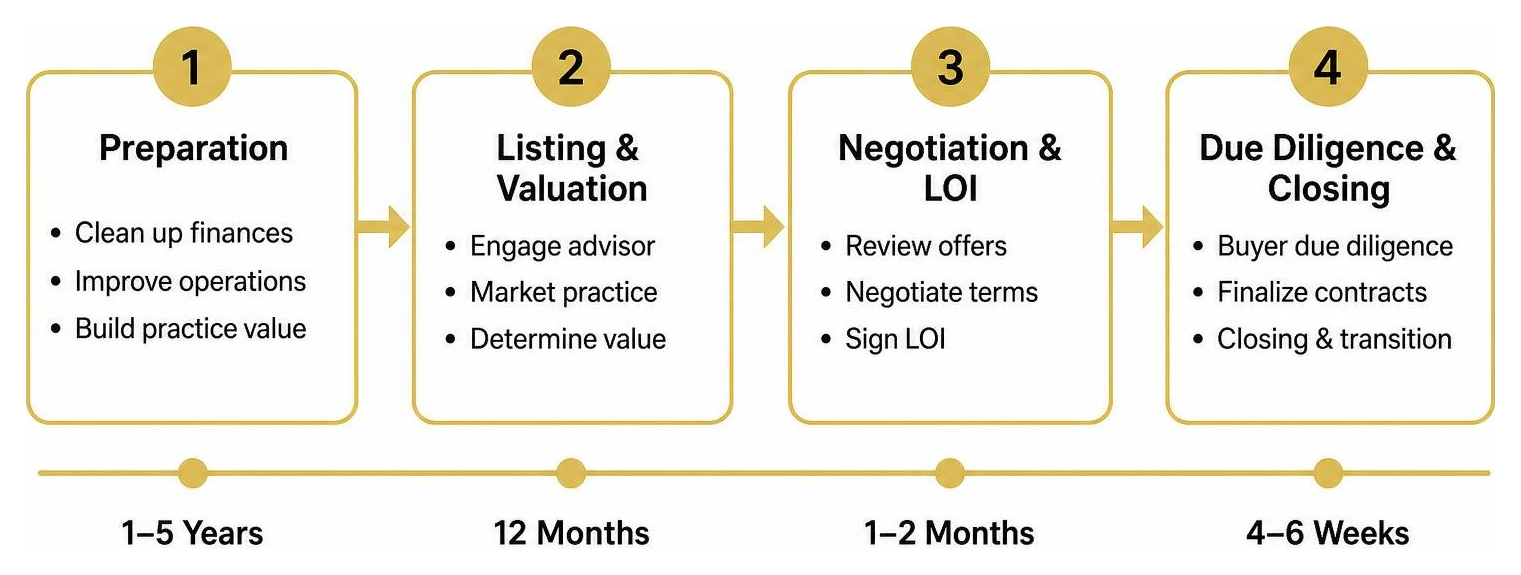
Once a practice is officially under contract, the transition period typically moves fast. The ideal timeframe between final contract signing and closing is between four and six weeks to minimize disruptions and retain patient revenue streams.
Minimizing Buyer Claims and Retreatment Liabilities in the Dental Practice Sell Process
One common post-sale issue involves clinical retreatment disputes—such as a buyer claiming that crowns, root canals, or fillings completed shortly before closing were defective and required re-doing.

To protect yourself against ongoing liability and preserve relationships, consider including these risk-management clauses in your purchase contract:
- Retreatment Thresholds (“Basket”): Establishes a minimum financial threshold (e.g., $2,500 to $5,000) that the buyer must absorb before asking the seller for retreatment reimbursement. This prevents small, routine adjustments from triggering legal claims.
- Retreatment Window: Limits seller financial responsibility for clinical corrections to a set window, typically 6 to 12 months post-closing.
- Neutral Arbiter Clause: Requires an independent, mutually agreed-upon dentist to evaluate disputed cases and determine whether retreatment was clinically necessary or simply a difference in clinical judgment.
- Tail Insurance Coverage: Secure an extended reporting endorsement (“tail insurance”) on your claims-made professional liability policy to maintain malpractice cover for services provided prior to the sale.
Notifying Staff, Patients, and Vendors
Timing your announcements is critical. Prematurely disclosing a potential sale can create staff anxiety and patient attrition, while late announcements cause confusion.

- Staff Notification: Inform your practice team 3 to 4 months before closing or immediately after all closing contingencies (such as buyer bank financing) are removed. Reassure key personnel regarding job security, tenure recognition, and benefits continuity.
- Patient Communications: Send formal transition letters 30 to 45 days prior to closing. Introduce the incoming dentist warmheartedly, highlight their clinical background, and reassure patients that their familiar hygiene staff and appointment schedules remain unchanged.
- Vendors and Insurance Payers: Initiate dental supply vendor transfers, IT system license assignments, and insurance provider credentialing re-assignments well in advance to prevent revenue interruptions post-closing.
For actionable strategies on managing this shift, read our guide on ensuring a smooth handover during the seller-to-buyer transition.
Frequently Asked Questions About Dental Practice Sales
How long does it typically take to sell a dental practice?
The timing varies based on geographic demand, profitability, and owner readiness. While high-demand practices in growing suburban markets sell within 6 to 12 weeks post-valuation, practices located in lower-demand rural areas can take between 2 and 5 years. Overall transition planning yields the best results when started 1 to 5 years prior to your desired retirement date.
How can a practice owner increase value before selling?
Owners can increase valuation by modernizing dental equipment, maintaining active patient charts (patients seen within 18 months), growing the hygiene department to account for over 30% of gross revenue, updating outdated fee schedules, and ensuring three consecutive years of clean, verifiable financial statements.
How are patient retreatment disputes handled post-sale?
Retreatment disputes are addressed directly in the asset purchase agreement. Best practices include setting up a monetary “basket” threshold (e.g., $2,500) before claims can be made, restricting liability to 6 or 12 months post-sale, and inserting an independent dental arbiter clause to evaluate contested clinical work objectively.
Conclusion

Selling your dental practice represents the capstone of your professional career. By following a structured dental practice sell process—from early advisory team assembly and financial cleanup to deliberate tax structuring and patient notification—you can protect your legacy, secure top dollar, and establish a comfortable path into your next chapter.
If you are ready to explore your options or want to learn what your business is worth in today’s market, explore our resource on selling your business and crafting a meaningful exit beyond just the price.
When you are ready for tailored support, contact Earned Exits to schedule a confidential consultation with our deal team.
